
Sports Injury Physiotherapy: Treatment, Recovery & Prevention
Introduction
Sports and exercise are important for staying active, but sudden movements, repetitive training, poor technique, inadequate recovery, or accidents can sometimes lead to injuries. A sports injury may affect the muscles, joints, ligaments, tendons or movement of the body and can make walking, exercising, working or playing difficult.
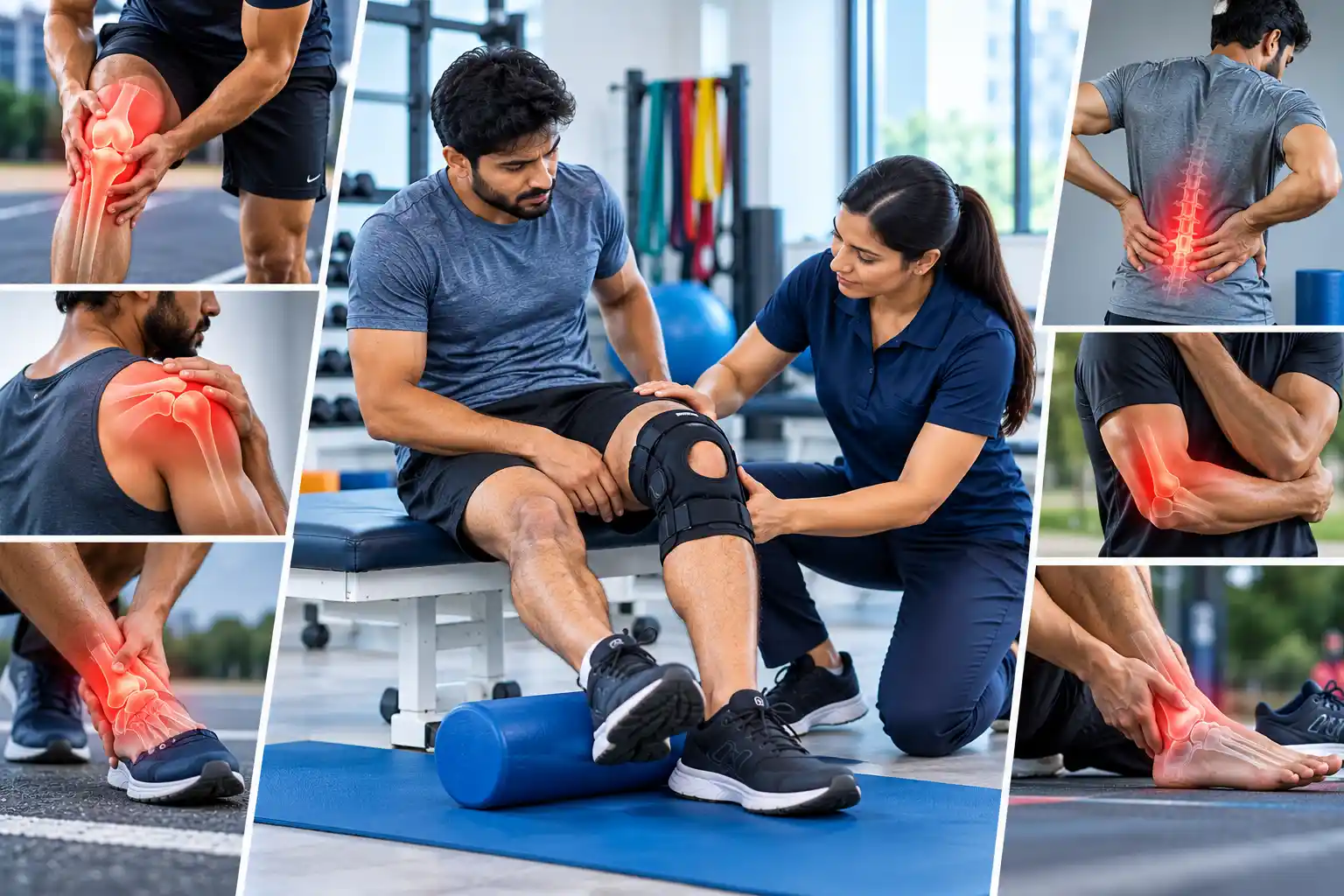
Sports Injury Physiotherapy focuses on assessing the injury, managing symptoms, restoring movement and strength, and gradually helping a person return to normal activities or sport. Physiotherapy can also help identify movement or strength problems that may increase the risk of another injury.
At Fitsiomax Physiotherapy & Fitness Centre, patients in Chennai can receive personalized physiotherapy and rehabilitation support through branches in Anna Nagar, T. Nagar, Parrys and ECR. Treatment is planned according to the individual’s condition, activity level and recovery goals.
Sports Injury Physiotherapy is a structured physiotherapy approach for people recovering from sports or exercise-related injuries. It may include pain management, mobility exercises, stretching, strengthening, balance training, manual therapy and sport-specific rehabilitation. The goal is to restore function and support a gradual, safe return to activity.
What Are Sports Injuries?
A sports injury is an injury that happens during sports, exercise, gym workouts or other physical activities. It may occur suddenly, such as during a fall or awkward landing, or develop gradually because of repeated stress or overuse.
Common examples include:
- Muscle strains
- Ligament sprains
- Knee injuries
- Ankle sprains
- Shoulder injuries
- Tendon problems
- Tennis elbow
- Runner’s knee
- ACL injuries
- Muscle tightness
- Overuse injuries
Sports injuries are not limited to professional athletes. People who play cricket, football, badminton, running, swimming or gym-based workouts can also experience them.
Why can a sports injury keep causing problems?
Returning to intense activity too quickly may place additional stress on an injured area. Reduced strength, limited mobility, poor balance or changes in movement can also affect recovery.
This is why rehabilitation is not simply about waiting for pain to disappear. A physiotherapist can assess movement and progressively introduce appropriate exercises based on the person’s condition and goals.
Common Causes of Sports Injuries
Sports injuries can have different causes. Some common factors include:
1. Sudden movements
Quick changes in direction, jumping, landing or twisting can place stress on muscles and joints.
2. Overtraining
Increasing training volume or intensity too quickly without enough recovery may increase injury risk.
3. Poor exercise technique
Incorrect movement patterns during gym exercises, running or sports may place unnecessary stress on certain body parts.
4. Muscle weakness
Weakness in the legs, hips, core or shoulders can affect movement control during physical activity.
5. Limited flexibility or mobility
Restricted joint movement or muscle tightness may affect how the body handles sports movements.
6. Previous injuries
An earlier injury may affect strength, balance or movement if rehabilitation was incomplete.
7. Insufficient recovery
Training continuously without appropriate rest can make it harder for the body to adapt to physical demands.
Common Symptoms of a Sports Injury
Symptoms depend on the type and severity of the injury.
You may experience:
- Pain during or after exercise
- Swelling
- Stiffness
- Reduced range of movement
- Muscle weakness
- Difficulty walking or running
- Difficulty climbing stairs
- Reduced balance
- Pain while jumping or changing direction
- Reduced sports performance
- Tenderness around an injured area
For example, an ankle injury may affect balance and walking, while a knee injury may make squatting, running or climbing stairs uncomfortable.
If symptoms are severe, suddenly worsening, or associated with significant swelling, deformity, inability to bear weight, numbness or other concerning symptoms, seek appropriate medical assessment rather than trying to manage the injury yourself.
Who Is at Risk of Sports Injuries?
Sports injuries can affect both recreational exercisers and athletes.
You may have a higher risk when you:
- Start intense exercise suddenly
- Increase training too quickly
- Repeat the same movement frequently
- Exercise with poor technique
- Have muscle weakness
- Have reduced mobility
- Return to sport before completing rehabilitation
- Have had a previous injury
- Do not allow adequate recovery between demanding sessions
Office workers who suddenly begin intense gym training can also experience problems because their body may not yet be adapted to the new physical workload.
How Can Physiotherapy Help With Sports Injuries?
Can physiotherapy help with a sports injury?
Yes. Depending on the injury, physiotherapy may help manage symptoms, restore movement, improve strength and balance, and support a gradual return to sport or exercise. A physiotherapist first assesses the person’s condition before selecting appropriate treatment and exercises.
A sports rehabilitation program may include:
Pain and symptom management
Your physiotherapist may recommend appropriate strategies to help manage pain, swelling or stiffness based on the injury.
Mobility exercises
Gentle and progressive mobility exercises may help restore movement around an affected joint.
Strengthening exercises
Targeted strengthening can help restore muscle capacity after an injury. Exercises are progressed according to the person’s ability and recovery stage.
Balance and stability training
Balance exercises can be particularly useful following injuries involving the ankle, knee or lower limb.
Manual therapy
Where appropriate, a physiotherapist may use hands-on techniques to support joint or soft-tissue mobility.
Sport-specific rehabilitation
As recovery progresses, rehabilitation can include movements that resemble the demands of the patient’s sport, such as running, jumping, changing direction or controlled throwing.
This gradual progression is important because returning to sport is not always the same as simply being able to walk without pain.
Sports Injury Treatment and Rehabilitation
A sports injury treatment plan should be personalized rather than identical for every patient.
A typical rehabilitation pathway may involve:
Assessment → symptom management → mobility → strengthening → balance/control → functional training → sport-specific training → gradual return to activity
The exact sequence and duration can vary according to the injury, surgery status, age, fitness level, sport and recovery progress.
For example, someone recovering from an ACL injury may need progressive range-of-motion work, strengthening, balance training and later running or sport-specific drills.
Similarly, after an ankle sprain, rehabilitation may focus on restoring movement, strength, balance and agility before returning to higher-demand activities.
Sports Injury Prevention Tips
How can you reduce the risk of another sports injury?
You can support injury prevention by:
- Warming up before demanding activity
- Increasing exercise intensity gradually
- Maintaining appropriate strength and mobility
- Learning correct exercise technique
- Allowing sufficient recovery
- Avoiding sudden increases in training volume
- Following a rehabilitation program after injury
- Using appropriate footwear and equipment
- Paying attention to persistent pain
- Returning to sport progressively
A physiotherapist can also identify movement limitations, weakness or balance problems that may need attention before returning to full activity.
When Should You Consult a Physiotherapist?
Consider a physiotherapy assessment when an injury is affecting your:
- Walking
- Running
- Exercise
- Sports participation
- Work
- Daily activities
- Joint movement
- Strength or balance
You should seek prompt medical assessment for serious injuries, such as suspected fractures, major trauma, significant deformity, severe or rapidly increasing swelling, inability to bear weight, or neurological symptoms.
Do not continue intense sports activity simply to “push through” significant pain. A proper assessment can help determine whether physiotherapy is appropriate or whether further medical evaluation is needed.
Sports Injury Physiotherapy in Chennai
If you are searching for Sports Physiotherapy in Chennai, choosing a clinic that provides assessment-based rehabilitation can make the recovery process more structured.
Fitsiomax Physiotherapy & Fitness Centre provides physiotherapy, rehabilitation and fitness services across Chennai, including Anna Nagar, T. Nagar, Parrys and ECR.
Patients searching for a physiotherapy clinic in Anna Nagar, physiotherapy clinic in T. Nagar, physiotherapy clinic in Parry’s, or physiotherapy clinic in ECR can choose the location that is convenient for them.
If you are searching online for physiotherapy near me in Chennai, Fitsiomax offers multiple clinic locations for physiotherapy and rehabilitation support.
Why Choose Fitsiomax for Sports Injury Physiotherapy?
Fitsiomax focuses on personalized physiotherapy, rehabilitation, mobility and fitness support. The clinic’s approach includes assessment, individualized treatment planning, guided exercises and progress support.
Depending on the patient’s condition, sports rehabilitation may involve:
- Physiotherapy assessment
- Pain management
- Mobility exercises
- Stretching
- Strength training
- Balance exercises
- Manual therapy
- Functional rehabilitation
- Sport-specific exercises
- Home exercise guidance
The aim is to help patients understand their condition, improve movement and progressively return to their normal activities or sport.
Conclusion
A sports injury does not always mean you have to stop being active for the long term. Appropriate assessment and structured sports injury physiotherapy can help manage symptoms, restore mobility and strength, and support a gradual return to physical activity.
Recovery varies from person to person, so avoid copying another person’s rehabilitation program. If you have persistent sports-related pain, weakness, stiffness or difficulty returning to exercise, consult a qualified physiotherapist for an individual assessment.
If you are looking for Sports Injury Treatment in Chennai or Sports Rehabilitation in Chennai, Fitsiomax Physiotherapy & Fitness Centre provides physiotherapy and rehabilitation support through Anna Nagar, T. Nagar, Parrys and ECR.
Book a physiotherapy consultation with Fitsiomax and get a personalized recovery plan based on your condition and activity goals.
Visit fitsiomax.clinic | Call us | Walk into our clinic in Chennai
Frequently Asked Questions
1. What is sports injury physiotherapy?
Sports injury physiotherapy is rehabilitation designed to help people recover from sports or exercise-related injuries. It may include mobility, strengthening, balance, manual therapy and sport-specific exercises.
2. Can physiotherapy help with sports injuries?
Yes. Depending on the injury, physiotherapy may help reduce symptoms, improve movement and strength, and support a gradual return to sports or exercise.
3. How long does sports injury rehabilitation take?
Recovery time varies depending on the type and severity of injury, treatment requirements, surgery status, fitness level and individual progress. Your physiotherapist can provide more specific guidance after assessment.
4. Can I return to sports after physiotherapy?
Many people can progressively return to their desired activities after rehabilitation. The timing depends on the injury and whether strength, mobility, balance and functional goals have been restored sufficiently.
5. Where can I find sports injury physiotherapy near me in Chennai?
Fitsiomax Physiotherapy & Fitness Centre provides physiotherapy services through branches in Anna Nagar, T. Nagar, Parrys and ECR.