
Injury Slowing You Down? Your Guide to Physiotherapy & Rehabilitation in Chennai
Introduction
An injury can affect much more than exercise. It may make walking, working, climbing stairs, lifting, playing sports, or even completing normal daily activities difficult. Whether the problem started after a sports injury, gym workout, fall, repetitive strain, or surgery, returning to activity safely often requires more than simply waiting for the pain to disappear.
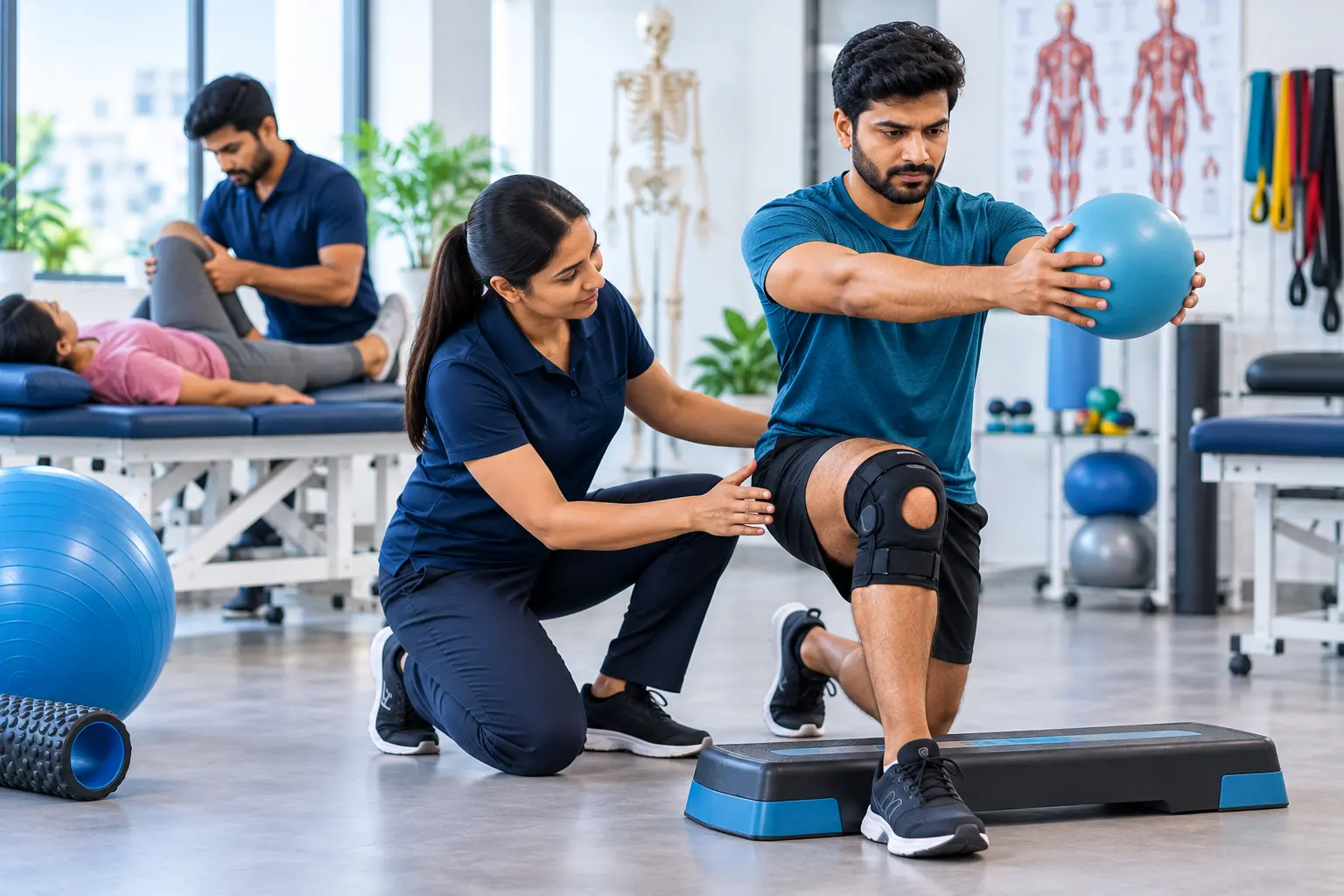
Injury rehabilitation is a structured recovery process designed to restore movement, strength, flexibility, balance, and physical function after an injury. Physiotherapy can play an important role in this process by assessing the injury, identifying functional limitations, and creating a rehabilitation programme suited to the individual.
At Fitsiomax Physio & Fitness Studio, patients looking for physiotherapy in Chennai can access physiotherapy and rehabilitation support across Anna Nagar, T. Nagar, Parrys, and ECR.
Can physiotherapy help back, neck or knee pain? Physiotherapy may help many musculoskeletal problems by assessing movement, strength, mobility and activities that trigger symptoms. Depending on the condition, treatment may include education, exercise, strengthening, mobility work, activity modification and other rehabilitation methods to improve function and support recovery.
What Is Injury Rehabilitation?
Injury rehabilitation is a planned process that helps a person gradually regain movement, strength, function, and confidence after an injury. Depending on the condition, it may include mobility exercises, strengthening, balance training, movement retraining, activity modification, and a progressive return to work, exercise, or sport.
The rehabilitation process is different for every person. A mild muscle strain, for example, will usually require a different approach from a ligament injury or post-surgery recovery.
The aim is not simply to reduce pain. Good rehabilitation also considers what you need to be able to do again safely and comfortably.
What Types of Injuries May Need Rehabilitation?
Not every minor ache requires a lengthy rehabilitation programme. However, professional assessment may be helpful when an injury causes persistent pain, restricted movement, weakness, swelling, instability, or difficulty performing normal activities.
Common problems seen during physiotherapy rehabilitation may include:
- Muscle strains and soft-tissue injuries
- Ligament and joint injuries
- Sports-related injuries
- Back and neck injuries
- Shoulder problems
- Knee injuries
- Ankle injuries
- Repetitive strain problems
- Reduced movement after immobilisation
- Post-surgery weakness and stiffness
The exact cause should be assessed rather than assumed from symptoms alone.
What Are Common Signs That an Injury Needs Attention?
Pain is one sign of injury, but it is not the only factor that matters. Pay attention to how the problem affects movement and daily function.
You may benefit from an assessment if you experience persistent pain, reduced range of motion, joint stiffness, weakness, swelling, difficulty walking, reduced balance, difficulty using stairs, or discomfort that repeatedly returns when you exercise.
Athletes may notice that they can perform everyday activities comfortably but develop symptoms when running, jumping, changing direction, or returning to their sport.
Similarly, office workers may find that an injury becomes more noticeable after long periods of sitting or repetitive work.
Who Can Benefit From Injury Rehabilitation?
Athletes and Active Adults
Sports can place significant demands on muscles, tendons, ligaments, and joints. Returning too quickly after an injury may overload tissues that are not yet ready for normal sporting demands.
Sports injury rehabilitation can provide a structured progression from basic movement and strength exercises toward more demanding sport-specific activities.
Office and Daily Workers
Injuries are not limited to athletes. Repetitive tasks, lifting, prolonged sitting, physically demanding work, or an unexpected movement can also contribute to musculoskeletal problems.
A rehabilitation plan can consider the physical requirements of your job and everyday activities.
Older Adults
An injury may affect mobility, balance, strength, and independence. Physiotherapy can support a gradual return to everyday activities based on the person’s condition and abilities.
Post-Surgery Patients
Some patients require physiotherapy after injury and surgery to progressively restore movement and physical function. Rehabilitation should follow the surgeon’s instructions and any relevant post-operative precautions.
How Can Physiotherapy Help After an Injury?
Physiotherapy after an injury may help restore movement, improve strength, manage symptoms, and progressively prepare the body for everyday or sporting activities. Treatment should be based on an assessment and adapted as recovery progresses.
A physiotherapist may first ask how the injury happened, when symptoms started, what movements cause difficulty, and what activities you want to return to.
They may then assess factors such as movement, mobility, strength, balance, and functional ability.
This information helps guide an appropriate injury rehabilitation programme rather than simply prescribing the same exercises to every patient.
What Does a Physiotherapy Rehabilitation Programme Include?
1. Pain and Symptom Management
During the early stages of recovery, the physiotherapist may provide advice on modifying activities and managing symptoms while maintaining appropriate movement.
The goal is not necessarily complete rest. The right level of activity depends on the injury and stage of recovery.
2. Mobility Exercises
Injuries can sometimes reduce comfortable joint or muscle movement. Appropriate mobility and stretching exercises may be introduced when clinically suitable.
3. Progressive Strengthening
Strengthening is an important part of many rehabilitation programmes.
Exercises can start at an appropriate level and gradually become more challenging as strength and tolerance improve.
4. Balance and Movement Training
Some lower-limb injuries can affect balance, coordination, or confidence during movement. Rehabilitation may therefore include exercises that progressively challenge these abilities.
5. Functional Rehabilitation
Eventually, exercises should relate to what the patient needs to do.
An office worker, runner, older adult, gym-goer, and competitive athlete may all require different rehabilitation goals.
6. Return-to-Sport Rehabilitation
Sports injury physiotherapy may progress from basic strength and mobility exercises to running, jumping, landing, changing direction, or other sport-specific tasks when appropriate.
Returning to sport should be based on individual recovery rather than simply waiting for a fixed number of days.
What Can You Do at Home During Injury Recovery?
Home care depends on the type and severity of the injury, but several general principles can support a rehabilitation programme.
Follow the exercises prescribed for you and perform them using the recommended technique. Avoid suddenly increasing training intensity because symptoms have improved for a few days.
Gradually rebuild activity and allow adequate recovery between demanding sessions. If an exercise causes a significant or persistent worsening of symptoms, discuss it with your physiotherapist rather than automatically pushing through it.
Most importantly, avoid copying rehabilitation exercises simply because another person had pain in the same area. Similar symptoms can have different causes and rehabilitation needs.
When Should You Visit a Physiotherapist After an Injury?
Consider consulting a qualified physiotherapist in Chennai if an injury is limiting walking, work, exercise, sport, or other normal activities; if symptoms are not improving as expected; or if pain repeatedly returns when you increase activity.
Assessment may also be valuable when you feel better but are unsure whether you are physically ready to return to demanding exercise or sport.
How Long Does Injury Rehabilitation Take?
There is no single recovery timeline for every injury.
Recovery can depend on the injured tissue, severity of the problem, age, general health, treatment requirements, physical demands, previous injuries, and whether surgery was required.
A minor injury may progress relatively quickly, while significant ligament injuries, fractures, surgery, or complex conditions can require longer rehabilitation.
Your physiotherapist can monitor progress and adjust exercises based on how you respond rather than promising a fixed recovery date.
Physiotherapy & Injury Rehabilitation in Chennai
When people search for “physiotherapy near me,” “physiotherapy clinic in Chennai,” or “sports physiotherapist in Chennai,” convenience matters, but appropriate assessment and individualized rehabilitation are also important.
Fitsiomax Physio & Fitness Studio provides physiotherapy and rehabilitation services across Chennai through its Anna Nagar, T. Nagar, Parrys, and ECR locations.
Patients seeking sports injury physiotherapy in Chennai or rehabilitation following other musculoskeletal injuries can enquire about an assessment to understand their current movement, strength, symptoms, and recovery goals.
Why Choose Fitsiomax for Physiotherapy in Chennai?
At Fitsiomax Physio & Fitness Studio, rehabilitation can be planned around the patient’s condition, functional limitations, and goals.
Depending on individual needs, treatment may include mobility exercises, strengthening, stretching, movement training, manual therapy, balance work, and progressive rehabilitation exercises.
For someone returning to normal daily activities, the goal may be comfortable walking, lifting, or climbing stairs. For an athlete, rehabilitation may progress toward the physical demands required for training and sport.
The focus is on supporting recovery and helping patients progressively rebuild physical function rather than promising an instant or permanent cure.
Conclusion
An injury can temporarily slow you down, but recovery should be approached with a clear plan.
Injury rehabilitation can help rebuild movement, strength, balance, and functional ability after many musculoskeletal injuries. Physiotherapy also provides a structured way to progress from the early stages of recovery toward work, exercise, daily activities, or sport.
If an injury is continuing to affect your movement or activities, consider a professional assessment instead of relying only on rest or random exercises online.
Looking for physiotherapy and injury rehabilitation in Chennai? Contact Fitsiomax Physio & Fitness Studio to enquire about an assessment at Anna Nagar, T. Nagar, Parrys, or ECR.
Visit fitsiomax.clinic | Call us | Walk into our clinic in Chennai
Frequently Asked Questions
1. What is injury rehabilitation?
Injury rehabilitation is a structured process designed to progressively restore movement, strength, mobility, and function after an injury.
2. Can physiotherapy help with injury recovery?
Physiotherapy may support recovery from many musculoskeletal injuries through assessment, exercise, strengthening, mobility work, activity guidance, and progressive rehabilitation.
3. When should I start physiotherapy after an injury?
The appropriate time depends on the type and severity of the injury. Some conditions benefit from early appropriate movement, while others require medical treatment or specific precautions first. A qualified professional can advise you.
4. How long does sports injury rehabilitation take?
There is no standard recovery time. It depends on the injury, its severity, treatment required, physical demands, and individual progress.
5. Where can I find injury rehabilitation in Chennai?
Fitsiomax Physio & Fitness Studio provides physiotherapy and rehabilitation services through its Anna Nagar, T. Nagar, Parrys, and ECR locations in Chennai.