
Why Your Muscles Stay Sore for Days After Exercise and How Physio Helps
Introduction
Have you ever started a new workout routine and found it difficult to walk, climb stairs, or even lift your arms the next day? This lingering discomfort is often caused by delayed onset muscle soreness (DOMS). While muscle pain after workout sessions is common, pain that lasts for several days can interfere with your daily activities and fitness goals.
Many people assume soreness means they had a “good workout,” but persistent pain should never be ignored. Understanding why your muscles become sore and how to recover properly can help prevent injuries and improve performance.
At Fitsiomax Physiotherapy & Fitness Centre, our experienced physiotherapists help people across Anna Nagar, T. Nagar, Parrys, and ECR recover safely from exercise-related muscle pain through evidence-based physiotherapy treatments and personalised rehabilitation programs.
Delayed onset muscle soreness (DOMS) is muscle pain and stiffness that usually develops 12 to 24 hours after unfamiliar or intense physical activity, often peaking between 24 and 72 hours. It is a temporary response to microscopic muscle fibre damage during exercise. Physiotherapy, gentle movement, stretching, and progressive strengthening may help reduce discomfort and support recovery.
What Is Delayed Onset Muscle Soreness (DOMS)?
Delayed onset muscle soreness, commonly known as DOMS, is the muscle discomfort many people experience after starting a new exercise program or increasing workout intensity.
Unlike an injury that causes immediate pain, DOMS develops gradually after physical activity.
It commonly affects people after:
- Returning to the gym after a long break
- Strength training
- Running downhill
- Long-distance cycling
- High-intensity interval training
- Sports practice
- Hiking
- Functional fitness workouts
The soreness usually improves within a few days as the muscles recover.
What Causes Delayed Onset Muscle Soreness?
Muscles become sore because exercise creates tiny microscopic tears within muscle fibres. These small changes are a normal part of muscle adaptation.
Common causes include:
Starting a New Workout
Trying unfamiliar exercises places new stress on muscles.
Increasing Workout Intensity
Lifting heavier weights or increasing repetitions can lead to muscle pain after workout sessions.
Eccentric Muscle Contractions
Exercises where muscles lengthen while under tension—such as lowering weights or walking downhill—commonly trigger DOMS.
Insufficient Recovery
Skipping rest days or training the same muscles repeatedly reduces recovery time.
Poor Warm-Up
Beginning intense exercise without proper preparation may increase soreness.
Poor Exercise Technique
Incorrect lifting posture or movement patterns place unnecessary stress on muscles and joints.
Common Symptoms of DOMS
People experiencing delayed onset muscle soreness may notice:
- Muscle tenderness
- Muscle stiffness after exercise
- Pain while moving affected muscles
- Reduced flexibility
- Temporary decrease in muscle strength
- Swelling around exercised muscles
- Difficulty climbing stairs
- Sore legs after workout sessions
- Muscle pain after gym workouts
- Body pain after exercise
- General fatigue
Most symptoms gradually improve within three to five days.
Who Is Most at Risk?
Although anyone can experience DOMS, it is more common in:
Beginners
People starting a fitness journey often develop sore muscles after gym workouts because their muscles are adapting.
Athletes Returning After a Break
Even experienced athletes can develop DOMS after periods of inactivity.
Office Workers
People with sedentary lifestyles who suddenly begin exercising often experience muscle pain after exercise.
Fitness Enthusiasts
Increasing workout intensity too quickly may result in body pain after workout sessions.
Older Adults
Age-related muscle changes can increase recovery time after physical activity.
Sports Participants
Football, badminton, tennis, cricket, marathon running, and CrossFit athletes commonly experience muscle soreness during intensive training.
Is Muscle Soreness Normal?
Yes—but only to a certain extent.
Mild soreness that gradually improves over several days is generally considered a normal response to exercise.
However, consult a healthcare professional if you experience:
- Severe swelling
- Sharp pain during exercise
- Inability to move a joint
- Severe muscle weakness
- Pain lasting longer than a week
- Numbness or tingling
- Joint instability
These symptoms may indicate an injury rather than typical DOMS.
How Physiotherapy Helps Muscle Recovery
While delayed onset muscle soreness (DOMS) usually resolves on its own, physiotherapy can make recovery more comfortable and help you return to your normal activities safely.
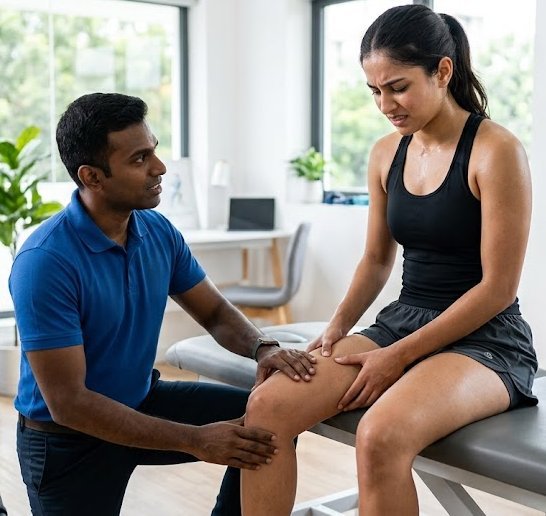
At Fitsiomax Physiotherapy & Fitness Centre, our physiotherapists begin with a detailed assessment to understand your activity level, exercise routine, movement patterns, and muscle condition before recommending a personalised treatment plan.
Physiotherapy may help:
- Reduce muscle pain after workout sessions
- Improve joint mobility and flexibility
- Relieve muscle stiffness after exercise
- Restore normal movement
- Reduce the risk of future muscle injuries
- Improve muscle strength and endurance
- Correct movement and posture problems
- Help athletes safely return to training
Physiotherapy Treatment Methods for Muscle Soreness
Manual Therapy
Manual therapy involves hands-on techniques performed by a physiotherapist to reduce muscle tightness, improve blood circulation, and increase joint mobility. It may also help relieve discomfort caused by muscle pain from exercise.
Stretching Exercises
Gentle stretching can improve flexibility and reduce muscle tightness without placing excessive stress on recovering muscles.
Your physiotherapist may recommend stretches for:
- Hamstrings
- Quadriceps
- Calves
- Hip muscles
- Shoulders
- Chest
- Back muscles
Stretching should always be performed within a comfortable range and without forcing painful movements.
Mobility Exercises
Restricted movement is common after intense workouts. Mobility exercises help restore normal joint movement and reduce stiffness.
Examples include:
- Shoulder mobility drills
- Hip mobility exercises
- Thoracic spine mobility
- Ankle mobility exercises
- Dynamic movement patterns
Progressive Strengthening
Once soreness begins to settle, strengthening exercises help muscles adapt to future physical demands.
These exercises may include:
- Bodyweight exercises
- Resistance band training
- Functional strengthening
- Core stability exercises
- Balance training
Gradually increasing exercise intensity helps reduce the likelihood of recurring DOMS.
Sports Massage Therapy
Sports massage may help improve circulation, reduce muscle tightness, and promote relaxation after strenuous physical activity.
It is commonly recommended for:
- Gym enthusiasts
- Recreational runners
- Cyclists
- Athletes
- Fitness professionals
Posture and Movement Correction
Many people unknowingly place excessive stress on muscles because of poor posture or incorrect exercise technique.
A physiotherapist can assess:
- Lifting mechanics
- Running gait
- Squat technique
- Desk posture
- Exercise form
Correcting these issues may help reduce repeated muscle soreness and improve overall performance.
Home Care Tips for Faster Recovery
If your muscles feel sore after exercise, these simple strategies may support recovery.
Stay Active
Complete rest is usually unnecessary. Gentle walking or light cycling can improve circulation and reduce stiffness.
Hydrate Well
Proper hydration supports normal muscle function and recovery after exercise.
Eat Enough Protein
Protein helps repair muscle tissue. Include lean meats, eggs, dairy products, legumes, or other protein-rich foods as part of a balanced diet.
Prioritise Sleep
Quality sleep allows the body to repair muscle tissue and recover from physical activity.
Apply Heat or Cold if Recommended
Depending on your symptoms, your physiotherapist may recommend heat or cold therapy to help manage discomfort.
Avoid Intense Exercise Too Soon
Training sore muscles aggressively may delay recovery and increase the risk of injury.
When Should You Consult a Physiotherapist?
Normal muscle soreness should gradually improve within a few days.
However, professional assessment is recommended if you experience:
- Severe muscle pain after exercise
- Pain lasting longer than one week
- Swelling that continues to increase
- Difficulty walking
- Reduced joint movement
- Muscle weakness
- Repeated soreness after every workout
- Pain that interferes with work or sleep
- Suspected muscle tear
Early physiotherapy assessment can help identify whether your symptoms are due to DOMS or a more significant injury requiring treatment.
Why Choose Fitsiomax Physiotherapy & Fitness Centre in Chennai?
Recovering from muscle soreness is not only about reducing pain—it is about helping your body move better, recover safely, and prevent future injuries.
At Fitsiomax Physiotherapy & Fitness Centre, our experienced physiotherapists provide personalised rehabilitation programmes tailored to your activity level and recovery goals.
Our approach includes:
- Comprehensive physiotherapy assessment
- Evidence-based treatment techniques
- Individualised rehabilitation exercises
- Manual therapy
- Sports rehabilitation
- Strength and mobility training
- Injury prevention advice
- Patient education for long-term recovery
We proudly serve patients across Anna Nagar, T. Nagar, Parrys, and ECR, making expert physiotherapy care easily accessible throughout Chennai.
Conclusion
Experiencing delayed onset muscle soreness after exercise is common, especially when starting a new fitness programme or increasing workout intensity. While mild soreness usually settles within a few days, persistent pain, severe stiffness, or repeated muscle discomfort should not be ignored.
With the right guidance, physiotherapy can help reduce muscle pain, improve movement, support recovery, and lower the risk of future injuries. Whether you are a beginner, athlete, office worker, or fitness enthusiast, a personalised rehabilitation plan can help you stay active safely.
If your muscle soreness is affecting your daily routine or delaying your return to exercise, consult the experienced physiotherapists at Fitsiomax Physiotherapy & Fitness Centre
Visit fitsiomax.clinic | Call us | Walk into our clinic in Chennai
Frequently Asked Questions
1. What is delayed onset muscle soreness (DOMS)?
Delayed onset muscle soreness (DOMS) is muscle pain and stiffness that develops 12–24 hours after unfamiliar or intense exercise and usually peaks within 24–72 hours before gradually improving.
2. Is muscle pain after a workout normal?
Yes. Mild muscle pain after a workout is a normal response to exercise as muscles adapt. However, severe pain, swelling, or symptoms lasting longer than a week should be assessed by a physiotherapist or healthcare professional.
3. How can physiotherapy help muscle soreness?
Physiotherapy may help reduce muscle pain, improve flexibility, restore movement, guide safe rehabilitation exercises, and reduce the risk of future exercise-related injuries.
4. How long does delayed onset muscle soreness last?
Most people recover within 3–5 days. Recovery time depends on exercise intensity, fitness level, age, and overall health.
5. When should I visit a physiotherapist for muscle pain?
You should consult a physiotherapist if muscle pain is severe, persists for more than a week, limits movement, affects daily activities, or is accompanied by swelling, numbness, or muscle weakness.