
Is Your Neck Pain Caused by Cervical Spondylosis? Signs, Symptoms and Treatment
Introduction
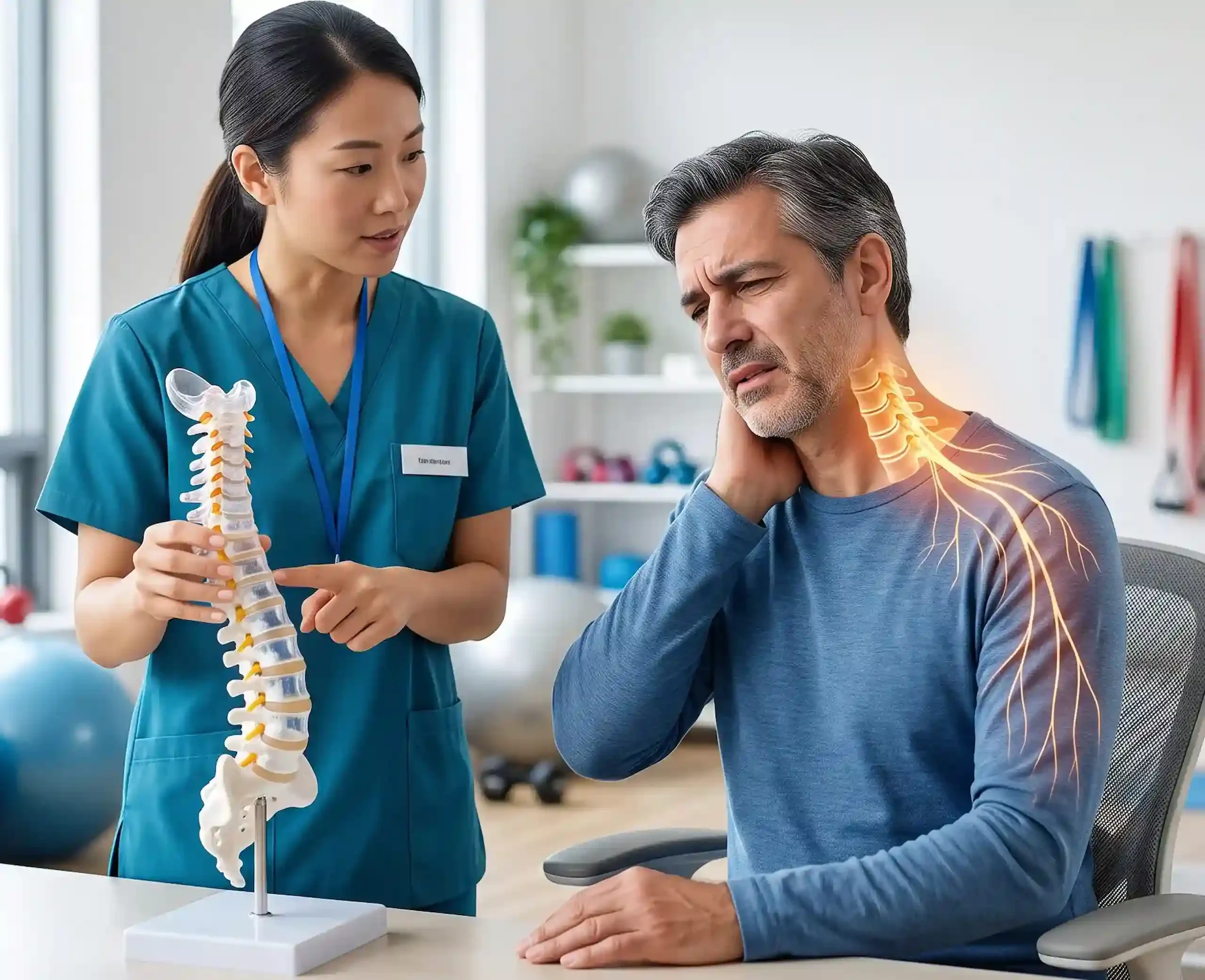
Neck pain is one of the most common health concerns among office workers, senior citizens, drivers, teachers, and people who spend long hours using computers or mobile phones. While occasional neck discomfort may improve with rest, persistent pain, stiffness, or tingling in the arms could be a sign of cervical spondylosis. Many people ignore these symptoms until they begin affecting their daily routine, sleep, or work productivity.
If you have been experiencing neck pain and stiffness, difficulty turning your head, or pain radiating to the left shoulder or right shoulder, it is important to understand the possible cause before the condition worsens. Early diagnosis and appropriate physiotherapy can help improve mobility, reduce pain, and support long-term neck health.
At Fitsiomax Physiotherapy & Fitness Centre, we provide evidence-based cervical spondylosis treatment in Chennai through our Anna Nagar, T. Nagar, Parrys, and ECR branches. Our experienced physiotherapists assess each patient individually and create customized rehabilitation plans to help restore movement and improve quality of life.
What Is Cervical Spondylosis?
Cervical spondylosis refers to the gradual wear and tear of the cervical spine, which consists of the seven vertebrae in your neck. As people age, the discs between these bones lose water content and elasticity. This natural degeneration can reduce flexibility and place additional stress on the joints, ligaments, and nerves.
Although it is commonly seen in people above the age of 40, early cervical spondylosis can also occur in younger adults due to prolonged poor posture, sedentary work, repetitive neck strain, or previous injuries.
Not everyone with cervical spondylosis experiences pain. However, when nearby nerves become irritated or compressed, symptoms may become more noticeable and interfere with daily life.
What Causes Cervical Spondylosis?
Several factors may contribute to cervical spondylosis, including:
Age-Related Changes
Natural degeneration of the spinal discs and joints over time.
Poor Posture
Working long hours on laptops, looking down at mobile phones, or improper sitting posture places continuous stress on the neck.
Repetitive Neck Movements
Jobs involving frequent neck movement or prolonged static positions may increase strain.
Previous Neck Injuries
Sports injuries, accidents, or falls can accelerate wear and tear.
Lack of Physical Activity
Weak neck and shoulder muscles provide less support for the cervical spine.
Genetic Factors
Some individuals may have a higher risk due to inherited spinal changes.
Common Cervical Spondylosis Symptoms
Symptoms vary from person to person depending on the severity of degeneration.
Common cervical spondylosis symptoms include:
- Persistent neck pain
- Neck pain and stiffness
- Stiff neck and shoulder pain
- Difficulty turning the head
- Muscle tightness
- Headaches beginning from the neck
- Pain radiating to the left shoulder
- Pain radiating to the right shoulder
- Shoulder pain radiating to the hand
- Numbness in the right arm
- Numbness in the right arm and hand
- Numbness in the left arm and hand
- Numbness in the arms while sleeping
- Neck, shoulder, and arm pain with numbness in the fingers
- Weakness in the hands
- Reduced grip strength
- Cervical spondylosis dizziness in some individuals
If symptoms become severe or are associated with balance problems, bowel or bladder changes, or progressive weakness, immediate medical evaluation is recommended.
Who Is at Risk?
Certain groups have a greater likelihood of developing cervical spondylosis.
These include:
- Office workers spending long hours at computers
- IT professionals
- Drivers
- Teachers
- Senior citizens
- Athletes with repetitive neck movements
- People recovering from neck injuries
- Individuals with poor ergonomic workstations
- Those with sedentary lifestyles
Maintaining good posture and regular physical activity may reduce the risk of developing symptoms.
Can Physiotherapy Help Cervical Spondylosis?
Yes. Physiotherapy is often recommended as a conservative treatment option for many people with mild to moderate cervical spondylosis. It aims to reduce pain, improve mobility, strengthen supporting muscles, and enhance daily function.
A physiotherapist first performs a detailed assessment to identify movement restrictions, muscle weakness, posture issues, and nerve involvement. Based on the findings, an individualized rehabilitation program is created.
Rather than simply masking pain, physiotherapy focuses on improving how the neck and upper back move together. This may help decrease recurring strain and support long-term recovery.
Physiotherapy Treatment Methods
At Fitsiomax, cervical spondylosis physiotherapy programs are tailored according to each patient’s symptoms and functional goals.
Posture Assessment and Correction
Many patients develop neck pain due to forward head posture or poor sitting habits. Learning proper posture during work, driving, and daily activities can reduce stress on the cervical spine.
Manual Therapy
Hands-on techniques may help improve joint mobility, decrease muscle tightness, and relieve stiffness.
Cervical Mobility Exercises
Gentle movement exercises help restore flexibility and reduce stiffness without placing unnecessary stress on the neck.
Strengthening Exercises
Improving the strength of the deep neck muscles, shoulders, and upper back provides better spinal support.
Stretching Program
Stretching tight muscles around the neck, chest, and shoulders helps improve posture and movement.
Pain Management Techniques
Depending on the individual’s condition, physiotherapists may recommend appropriate pain management approaches to improve comfort during rehabilitation.
Ergonomic Education
Patients learn workstation setup, sleeping positions, pillow selection, lifting techniques, and safe daily habits to reduce recurring strain.
Cervical Spondylosis Exercises
Exercises should always be performed under professional guidance, especially if symptoms involve numbness or dizziness.
Common exercises may include:
- Chin tuck exercises
- Neck range-of-motion exercises
- Shoulder blade squeezes
- Upper trapezius stretching
- Levator scapula stretching
- Deep neck flexor strengthening
- Scapular stabilization exercises
Avoid forceful neck movements or self-manipulation without professional advice.
Can Cervical Spondylosis Be Cured?
Many patients ask, “Can cervical spondylosis be cured?”
Cervical spondylosis is generally considered a long-term degenerative condition, meaning the structural age-related changes cannot usually be reversed. However, this does not mean symptoms cannot improve.
With appropriate physiotherapy, exercise, posture correction, activity modification, and healthy lifestyle habits, many people experience significant improvements in pain, mobility, strength, and overall function. Early treatment often leads to better outcomes.
Prevention Tips
Simple daily habits can help protect your neck.
- Maintain proper sitting posture.
- Keep computer screens at eye level.
- Take movement breaks every 30 to 45 minutes.
- Perform stretching exercises regularly.
- Strengthen neck and upper back muscles.
- Sleep with appropriate pillow support.
- Avoid carrying heavy bags on one shoulder.
- Stay physically active.
- Maintain a healthy body weight.
Small lifestyle changes can make a meaningful difference over time.
When Should You Consult a Physiotherapist?
Consider booking an assessment if you experience:
- Neck pain lasting more than one week
- Frequent stiffness
- Pain radiating to the shoulder or arm
- Tingling or numbness
- Reduced neck movement
- Weakness in the hands
- Recurrent headaches related to neck pain
- Difficulty performing daily activities
Early assessment helps identify the underlying cause and allows treatment to begin before symptoms become more severe.
Why Choose Fitsiomax Physiotherapy & Fitness Centre?
At Fitsiomax, we believe that every patient deserves personalized care based on thorough assessment and evidence-informed rehabilitation.
Our experienced physiotherapists provide individualized treatment programs designed to improve movement, reduce discomfort, and support long-term recovery. Whether your symptoms are related to age-related degeneration, prolonged desk work, sports activities, or post-injury stiffness, our team focuses on practical solutions that fit your daily life.
Patients can visit our physiotherapy clinics in Anna Nagar, T. Nagar, Parrys, and ECR, making it easier to access quality neck pain treatment in Chennai close to home or work. If you’re searching for physiotherapy near me in Chennai for cervical spondylosis, Fitsiomax offers comprehensive assessment, rehabilitation, and ongoing guidance tailored to your needs.
Conclusion
Ignoring persistent neck pain may allow symptoms to progress and affect your daily activities, work performance, and overall quality of life. If you have been experiencing neck pain, stiffness, numbness in the arms, or pain radiating to your shoulders, it is worth seeking professional assessment rather than relying on temporary relief alone.
Early physiotherapy can help improve mobility, strengthen supporting muscles, reduce pain, and guide you toward healthier movement habits. At Fitsiomax Physiotherapy & Fitness Centre, our experienced team is committed to providing patient-centered care across Anna Nagar, T. Nagar, Parrys, and ECR.
Book an assessment today to understand the cause of your symptoms and begin a personalized rehabilitation plan that supports your recovery and helps you return to your daily activities with greater confidence.
Visit fitsiomax.clinic | Call us | Walk into our clinic in Chennai
Frequently Asked Questions
1. What is cervical spondylosis?
Cervical spondylosis is an age-related condition that affects the bones, discs, and joints of the neck. It can cause neck pain, stiffness, reduced mobility, headaches, and sometimes numbness or tingling in the shoulders, arms, or hands.
2. What are the common symptoms of cervical spondylosis?
Common cervical spondylosis symptoms include persistent neck pain, neck stiffness, headaches, pain radiating to the shoulders or arms, numbness or tingling in the hands, muscle weakness, and occasionally dizziness. Symptoms can range from mild to severe depending on the condition.
3. Can physiotherapy help with cervical spondylosis?
Yes. Cervical spondylosis physiotherapy can help reduce pain, improve neck mobility, strengthen supporting muscles, correct posture, and enhance overall function. A physiotherapist will create a personalized treatment plan based on your symptoms and physical assessment.
4. Can cervical spondylosis be cured completely?
Cervical spondylosis is a degenerative condition, so the structural changes cannot usually be reversed. However, with cervical spondylosis treatment, physiotherapy, regular exercises, posture correction, and healthy lifestyle habits, many people can effectively manage symptoms and improve their quality of life.
5. When should I seek professional help for weight loss?
You should consult a physiotherapist if your neck pain lasts more than a week, keeps returning, causes stiffness, numbness, tingling, weakness, dizziness, or pain radiating to your shoulder or arm. Early assessment helps identify the cause and supports timely treatment.