
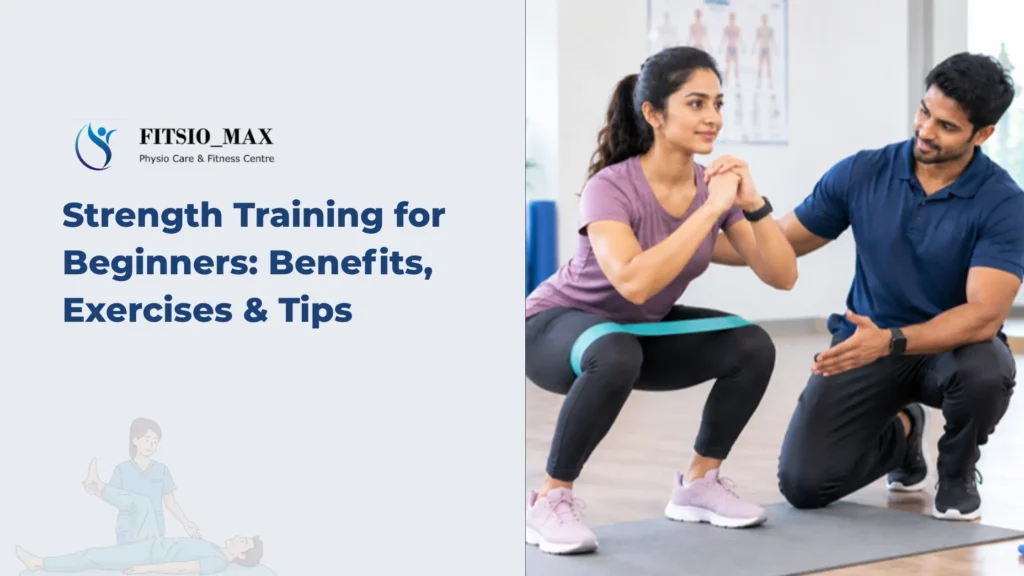
Strength Training for Beginners: Benefits, Exercises & Tips
Strength Training for Beginners: Benefits, Exercises & Tips Introduction Starting strength training for beginners does not mean you need to lift heavy weights or spend hours in a gym. Strength training can begin with simple bodyweight movements, resistance bands, light weights and exercises that match your current ability. For office workers, long hours of sitting can contribute to reduced activity and weakness. For older adults, maintaining strength can support everyday movements such as standing, climbing stairs and carrying objects. Athletes may use strengthening exercises as part of sports conditioning, while people recovering from injuries or surgery may need a more carefully progressed rehabilitation program. The key is to start at an appropriate level and gradually progress. Adults are generally advised to include muscle-strengthening activity on at least two days each week, alongside aerobic physical activity. At Fitsiomax Physiotherapy & Fitness Centre, strength and rehabilitation exercises can be adapted according to individual movement, strength, pain and fitness goals. What Is Strength Training? Strength training is exercise that makes your muscles work against resistance. The resistance can come from your body weight, resistance bands, free weights, machines or other equipment. For beginners, the goal is not simply to lift heavier weights. Good strength training focuses on: Proper exercise technique Controlled movement Appropriate resistance Consistent training Gradual progression Adequate recovery Bodyweight exercises, resistance bands and weights can all be used as forms of muscle-strengthening activity. What Are the Benefits of Strength Training for Beginners? Regular strength training can support several aspects of physical fitness. Improved Muscle Strength Progressive resistance exercises can help you develop stronger muscles for everyday activities and exercise. Better Functional Movement Strength is important for movements such as: Sitting and standing Climbing stairs Carrying groceries Getting out of a chair Lifting objects Maintaining posture Support for Healthy Aging Older adults can benefit from activities that maintain muscle strength and physical function. WHO recommends muscle-strengthening activities involving major muscle groups on at least two days each week. Better Exercise Capacity Building basic strength can make other physical activities easier to perform and may help you progress toward broader fitness goals. Support During Rehabilitation When appropriately prescribed, strengthening exercises can form an important part of rehabilitation after injury or surgery. The exercises and progression should depend on the person’s condition rather than following a generic routine. What Are the Best Strength Exercises for Beginners? There is no single best exercise for everyone. A beginner program can include simple movements targeting major muscle groups. Bodyweight Squats Squats train the muscles around the hips and thighs and can help develop strength for everyday movements. Start with a comfortable range of motion and focus on keeping the movement controlled. Wall Push-Ups Wall push-ups are a simpler alternative to floor push-ups. They can help beginners work on upper-body pushing strength while learning proper movement control. Glute Bridges Glute bridges involve the hip and lower-body muscles. They can be useful as part of a beginner program when performed with appropriate technique. Step-Ups A controlled step-up can train the legs and hips while also challenging balance. The step height should be appropriate for your ability. Resistance Band Rows Resistance band exercises can provide a convenient way to train pulling movements. Keep your shoulders controlled and avoid using momentum to complete the movement. Light Dumbbell Exercises Dumbbell exercises can be introduced when a beginner has developed basic movement control. The weight should allow you to maintain good t How Often Should Beginners Do Strength Training? For general adult health, current guidelines recommend muscle-strengthening activities on at least two days per week, involving the major muscle groups. However, beginners do not need to start at maximum intensity. A simple starting structure could be: Day 1: Full-body strength training Day 2: Walking or light activity Day 3: Recovery or mobility Day 4: Full-body strength training Day 5: Walking or another enjoyable activity Day 6: Optional light activity Day 7: Recovery This is only an example. Your ideal strength training routine should depend on your fitness level, health, previous injuries and goals. Can You Do Strength Training at Home? Yes. Strength training at home can be a practical option for beginners. You can start with: Bodyweight exercises Resistance bands A sturdy chair Light dumbbells Exercise mats You don’t necessarily need expensive gym equipment. However, equipment should not replace good technique. If an exercise repeatedly causes pain or you are unsure how to perform it, getting professional guidance can be useful. What Are Common Strength Training Mistakes? Starting With Too Much Weight Lifting more than you can control can make technique difficult and may increase injury risk. Ignoring Technique Correct movement is more important than completing a higher number of repetitions. Increasing Too Quickly Your body needs time to adapt. Gradual workout progression is generally more practical than making large increases suddenly. Training Through Significant Pain Normal muscle effort is different from sharp, severe or persistent pain. If an exercise causes significant symptoms, stop and consider professional assessment. Skipping Recovery Strength training creates a training demand on the body. Recovery, sleep, nutrition and appropriate rest are important parts of a sustainable routine. How Can Physiotherapy Help With Strength Training? Physiotherapy can be particularly useful when strength training is affected by pain, stiffness, weakness, previous injury or surgery. A physiotherapist may assess: Joint mobility Muscle strength Movement patterns Balance Posture Flexibility Previous injuries Exercise technique Based on the assessment, treatment may include: Strengthening exercises Mobility exercises Stretching Posture correction Manual therapy Rehabilitation exercises Movement retraining Pain-management strategies For people with chronic health conditions or physical limitations, professional guidance can help determine suitable physical activities and exercise levels. Is Strength Training Suitable for Office Workers? Yes, but the program should match the person’s physical condition. Someone who spends eight to ten hours sitting at a desk may experience stiffness around the neck, shoulders, back or hips. A fitness program can combine strengthening with mobility and regular movement throughout the day. For example, an office worker may benefit from a routine that includes appropriate: Hip