
Knee Pain After Hip Surgery: Causes, Treatment and Physiotherapy Recovery
Introduction
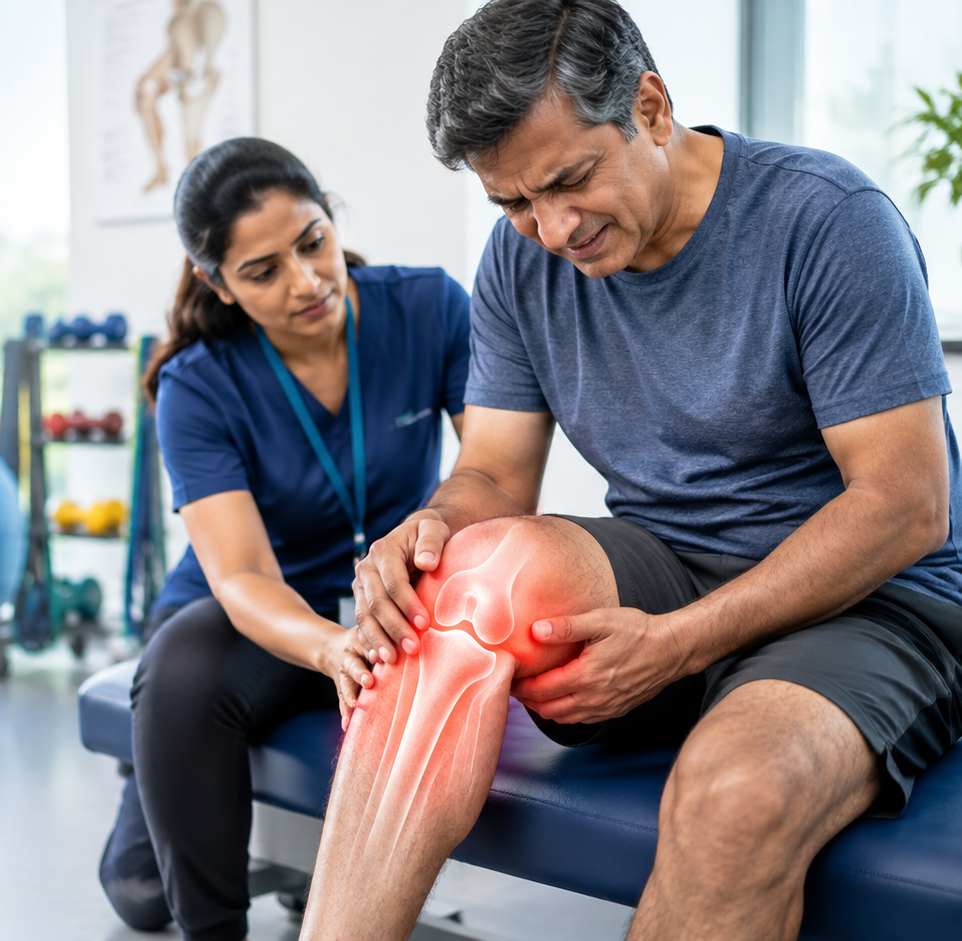
Experiencing knee pain after hip surgery can be confusing, especially when the original problem was in the hip. Some patients notice knee discomfort while walking, climbing stairs, standing for long periods, or getting in and out of a chair during recovery. Changes in walking patterns, muscle weakness, reduced mobility, swelling, or altered weight distribution can sometimes contribute to discomfort around the knee.
Recovery after hip surgery is different for every person. Age, type of surgery, previous joint problems, muscle strength, activity level, and rehabilitation progress can all influence recovery.
Knee pain after hip surgery physiotherapy in Chennai can help address movement limitations, weakness, stiffness, balance, and walking difficulties through an individually planned rehabilitation programme.
Fitsiomax Physiotherapy & Fitness Centre provides physiotherapy and rehabilitation support across Anna Nagar, T. Nagar, Parrys, and ECR.
Knee pain after hip surgery may occur because the way a person walks and distributes weight can temporarily change during recovery. Hip and leg muscle weakness, stiffness, reduced activity, altered movement patterns, or an existing knee condition may also contribute. A physiotherapist can assess the hip, knee, walking pattern, strength, and mobility to identify appropriate rehabilitation.
What Causes Knee Pain After Hip Surgery?
Knee pain following hip surgery does not necessarily mean that the knee itself has been injured. The hip and knee work together as part of the lower-limb movement system.
Several factors may contribute to knee discomfort during recovery.
Changes in Walking Pattern
After hip surgery, patients may temporarily walk differently because of pain, weakness, stiffness, or reduced confidence. This can change how forces are distributed through the leg and may contribute to knee discomfort.
Hip Muscle Weakness
The muscles around the hip may become weaker following surgery or a period of reduced activity. When the hip muscles are not working effectively, other muscles and joints may have to compensate during walking and daily activities.
Reduced Knee and Hip Mobility
Spending more time resting after surgery can result in stiffness. Reduced movement of the hip, knee, or ankle may affect normal walking mechanics.
Increased Dependence on the Operated Leg
As rehabilitation progresses, patients gradually return to weight-bearing and daily activities. A sudden increase in activity may sometimes aggravate discomfort.
Existing Knee Problems
Some patients already have knee osteoarthritis, previous injuries, muscle weakness, or other knee-related conditions. Hip surgery may make an existing knee problem more noticeable during the recovery period.
What Are the Common Symptoms?
Knee symptoms can vary depending on the cause.
A patient may experience:
– Pain around the front, side, or back of the knee
– Knee stiffness
– Discomfort while walking
– Difficulty climbing or descending stairs
– Pain when standing for long periods
– Reduced confidence while putting weight on the leg
– Weakness in the hip or thigh
– Difficulty getting up from a chair
– Reduced walking distance
– Difficulty returning to normal activities
The location, intensity, duration, and pattern of pain are important when determining the next step.
Can Physiotherapy Help With Knee Pain After Hip Surgery?
Yes, physiotherapy can support recovery by improving mobility, strength, balance, walking ability, and functional movement.
A physiotherapist can assess the relationship between the hip, knee, ankle, and overall movement pattern instead of focusing only on the painful area.
A rehabilitation programme may include:
– Hip and knee mobility exercises
– Progressive strengthening
– Walking and gait training
– Balance exercises
– Functional movement training
– Stretching where appropriate
– Posture and movement correction
– Manual therapy when clinically appropriate
– Pain and activity management
– Home exercise guidance
The exact treatment depends on the type of surgery, healing stage, medical advice, symptoms, and individual functional goals.
What Physiotherapy Treatments May Be Used?
- Mobility Exercises
Gentle and controlled exercises may help restore movement in the hip and knee. The exercises should follow the restrictions and recommendations provided after surgery.
- Strengthening Exercises
Weakness around the hip and thigh can affect walking and stair climbing. Progressive exercises may target the gluteal muscles, quadriceps, hamstrings, and other lower-limb muscles.
- Gait Training
A physiotherapist can observe how a patient walks and identify issues such as reduced stride length, uneven weight-bearing, or difficulty controlling the leg.
Appropriate gait training can help patients gradually work towards a more efficient walking pattern.
- Balance Training
Balance may be affected after surgery because of weakness, reduced activity, pain, or changes in movement. Progressive balance exercises can help improve confidence and lower-limb control.
- Functional Rehabilitation
Rehabilitation should eventually connect exercises to everyday activities. Depending on the person’s condition, this may include practising:
– Sit-to-stand movements
– Stair climbing
– Controlled squatting
– Walking
– Getting in and out of a chair
– Safe household movements
How Often Should You Do Strength Training?
ACL injuries are more common in people involved in sports that require frequent jumping, landing, pivoting, or sudden changes in direction.
People who may have a higher risk include:
– Athletes and recreational sports players
– People returning to sports after a long break
– Individuals with previous knee injuries
– People with reduced lower-limb strength or movement control
– Individuals performing sudden high-intensity activities without adequate preparation
However, an ACL injury can happen to anyone following an accident or unexpected twisting movement.
How Can Physiotherapy Help With ACL Injury Recovery?
ACL rehabilitation focuses on restoring movement, strength, stability, balance, and functional ability.
A physiotherapist may first assess knee movement, swelling, muscle strength, walking pattern, balance, pain, and functional limitations. The program can then be adjusted according to the recovery stage.
Physiotherapy may help with:
Improving Knee Mobility
Gentle mobility exercises can help address stiffness and gradually improve the available range of knee movement.
Building Muscle Strength
After an ACL injury or surgery, the muscles around the knee and hip can become weaker. Progressive strengthening may target the quadriceps, hamstrings, gluteal muscles, and other supporting muscles.
Improving Knee Stability
Balance and proprioception exercises can help the body improve awareness and control of the affected leg.
Improving Movement Patterns
A physiotherapist can assess movements such as walking, sitting, squatting, stepping, landing, and changing direction and provide appropriate movement training.
Supporting Return to Activity
For athletes, rehabilitation may gradually progress from basic exercises to functional drills according to individual recovery and professional assessment.
What Exercises May Help?
Exercises should be selected according to the person’s surgical recovery stage. Common rehabilitation exercises may include:
– Ankle pumps
– Quadriceps activation
– Straight-leg exercises when appropriate
– Gentle knee mobility exercises
– Hip strengthening exercises
– Glute strengthening
– Seated knee extension
– Supported standing exercises
– Step-up exercises
– Balance exercises
Not every exercise is suitable immediately after every type of hip surgery.
Do not start advanced exercises simply because they are recommended for someone else. Follow the surgeon’s precautions and a qualified physiotherapist’s exercise progression.
How Can You Manage Knee Pain at Home?
Along with your prescribed rehabilitation programme, some general measures may support recovery:
– Follow your post-surgery instructions carefully.
– Increase walking and activity gradually.
– Avoid suddenly increasing exercise intensity.
– Use walking aids as recommended.
– Perform prescribed home exercises consistently.
– Take adequate rest between activities.
– Avoid movements restricted by your surgeon.
– Keep follow-up appointments.
– Monitor changes in pain and swelling.
If an activity consistently increases symptoms, discuss it with your physiotherapist rather than simply pushing through the pain.
Can ACL Physiotherapy Help With Knee Pain?
Physiotherapy can help address some causes of knee pain associated with an ACL injury by improving movement, muscle function, strength, and load management.
However, persistent or severe knee pain should not simply be treated with exercises without understanding the underlying problem. A professional assessment can help determine whether the pain may be related to the ACL, another knee structure, muscle weakness, post-surgical stiffness, or another condition.
Prevention and Home Care Tips
While not every ACL injury can be prevented, good movement habits and appropriate physical preparation may help reduce injury risk.
Consider these general tips:
– Warm up before sports or high-intensity exercise.
– Build leg and hip strength gradually.
– Practise controlled landing and movement techniques.
– Avoid suddenly increasing exercise intensity.
– Give the body adequate recovery time.
– Follow your rehabilitation programme consistently.
– Do not return to competitive sports solely because pain has reduced.
– Follow professional advice after ACL surgery.
If an exercise causes significant pain, swelling, or instability, stop and discuss it with your physiotherapist.
When Should You Consult a Physiotherapist?
Professional assessment is particularly useful if:
– Knee pain continues during recovery.
– Walking remains difficult.
– You are struggling with stairs.
– Hip or thigh weakness is affecting daily activities.
– Knee stiffness is limiting movement.
– You feel unstable while walking.
– You are unsure which exercises are safe.
– You are not progressing as expected after surgery.
Seek prompt medical attention for severe or rapidly increasing pain, significant swelling, redness or warmth around the surgical area, fever, wound problems, sudden shortness of breath, chest pain, or other symptoms that may indicate a post-operative complication.
Is This Treatment Suitable for Older Adults and Daily Workers?
Yes. Physiotherapy after hip surgery is not only for athletes.
Older adults may need rehabilitation to regain safe walking, balance, independence, and confidence with daily activities.
Office workers may need support when prolonged sitting, reduced activity, or weakness makes returning to work uncomfortable.
A rehabilitation programme should be adapted to the individual’s age, health, surgery, occupation, mobility, and daily requirements.
Physiotherapy for Knee Pain After Hip Surgery in Chennai
If you are searching for knee pain after hip surgery physiotherapy in Chennai, choosing a conveniently located clinic can make it easier to attend regular rehabilitation sessions.
Fitsiomax Physiotherapy & Fitness Centre provides physiotherapy and rehabilitation services through branches in:
– Anna Nagar – physiotherapy and rehabilitation support for patients in and around Anna Nagar.
– T. Nagar – physiotherapy services for patients seeking rehabilitation in central Chennai.
– Parrys – physiotherapy and rehabilitation support for patients in and around Parrys.
– ECR – physiotherapy services for patients along ECR and nearby areas.
For people searching online for physiotherapy near me in Chennai, the nearest Fitsiomax branch can be considered based on convenience and the patient’s rehabilitation needs.
Why Choose Fitsiomax in Chennai?
Fitsiomax Physiotherapy & Fitness Centre provides physiotherapy, fitness, pain management, sports rehabilitation, and post-surgery rehabilitation support.
For patients recovering from hip surgery, the focus may include restoring mobility, rebuilding strength, improving walking mechanics, developing balance, and gradually returning to everyday activities.
The rehabilitation approach is based on the individual’s condition rather than using the exact same exercises for every patient.
With branches in Anna Nagar, T. Nagar, Parrys, and ECR, Fitsiomax provides accessible physiotherapy options across Chennai.
Conclusion
Knee pain after hip surgery can occur for different reasons, including changes in walking patterns, hip and thigh weakness, stiffness, altered weight distribution, increased activity, or an existing knee condition.
The important step is to understand why the knee is painful rather than treating the symptom alone.
Appropriate physiotherapy may help improve hip and knee mobility, muscle strength, balance, walking ability, and functional movement during recovery. Because every surgery and patient is different, exercises should be progressed according to the individual’s recovery stage and medical precautions.
If you are experiencing persistent knee pain after hip surgery, consult a qualified physiotherapist for an appropriate assessment and rehabilitation plan.
Looking for post-surgery physiotherapy in Chennai? Contact Fitsiomax Physiotherapy & Fitness Centre and book an assessment at your nearest branch.
Visit fitsiomax.clinic | Call us | Walk into our clinic in Chennai
Frequently Asked Questions
1. Why does my knee hurt after hip surgery?
Knee pain after hip surgery may be related to temporary changes in walking, muscle weakness, stiffness, altered weight distribution, increased activity, or an existing knee condition. An assessment can help identify the likely cause.
2. Can physiotherapy reduce knee pain after hip surgery?
Physiotherapy may help improve mobility, strength, walking mechanics, balance, and functional movement, which can support recovery and may reduce movement-related discomfort.
3. How long does recovery take after hip surgery?
Recovery varies depending on the type of surgery, overall health, age, strength, activity level, and rehabilitation progress. Follow the recovery plan provided by your surgical and physiotherapy team.
4. What exercises are safe after hip surgery?
Safe exercises depend on the type of surgery and the stage of recovery. A physiotherapist can recommend appropriate mobility, strengthening, balance, and functional exercises.
5. Where can I get post-hip surgery physiotherapy in Chennai?
Fitsiomax Physiotherapy & Fitness Centre provides physiotherapy and rehabilitation services through branches in Anna Nagar, T. Nagar, Parrys, and ECR.