
Walk Pain-Free Again,Post Knee and Hip Physiotherapy After Surgery
Introduction
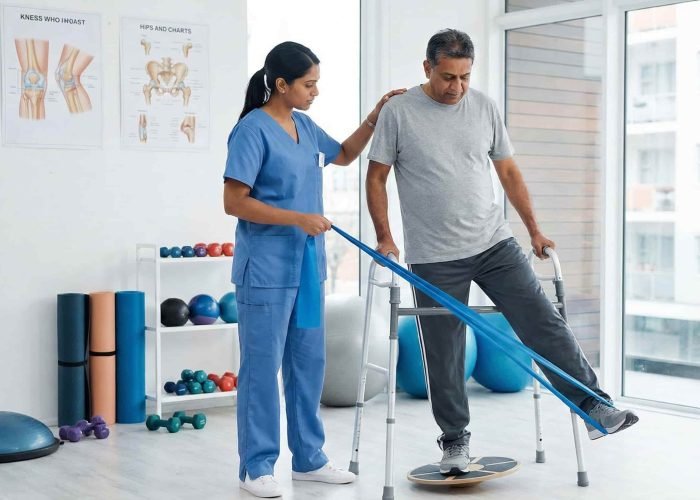
Post knee and hip physiotherapy is a structured rehabilitation program that begins after knee or hip surgery to reduce pain, control swelling, restore joint mobility, and rebuild muscle strength. It helps patients regain balance, improve walking patterns, and return to daily activities safely. In Chennai, expert-guided physiotherapy accelerates recovery, prevents complications such as stiffness, muscle weakness, and improper movement, and ensures long-term joint health. Through phase-wise rehabilitation, personalized exercise plans, gait training, posture correction, and continuous progress monitoring, patients experience faster healing, improved confidence, and better quality of life with sustained joint stability and functional independence.
What Is Post Knee & Hip Physiotherapy?
Post knee and hip physiotherapy is a specialized rehabilitation process designed for patients recovering from knee replacement or hip replacement surgery. It focuses on pain control, joint mobility, muscle strengthening, balance training, and walking correction. Physiotherapy post knee replacement and post operative physiotherapy for hip replacement are essential to avoid stiffness, weakness, and delayed recovery. This treatment is always customized based on surgery type, age, pain level, and overall health.
Why Is Post Knee & Hip Physiotherapy Needed After Surgery?
After surgery, joints are vulnerable to stiffness, muscle weakness, swelling, and improper movement patterns. Without proper rehabilitation, recovery can be slow and painful.
Common reasons physiotherapy is required include:
- Reduced joint mobility after surgery
- Muscle weakness around knee and hip
- Pain and swelling
- Difficulty walking or climbing stairs
Common Symptoms After Knee or Hip Surgery
Patients commonly experience the following symptoms during early recovery:
- Pain around the surgical area
- Swelling and stiffness
- Difficulty standing or walking
- Limited bending or straightening of the joint
- Muscle tightness or imbalance
Physiotherapy helps manage these symptoms safely and progressively.
Best Treatment Steps in Post Knee & Hip Physiotherapy
Post knee replacement physiotherapy protocol and post hip replacement physiotherapy follow a phase-wise approach.
Step-by demonstrates a safe recovery path:
- Pain and swelling control using modalities
- Gentle range-of-motion exercises
- Muscle strengthening for support and balance
- Gait training and posture correction
- Functional activities like stairs and daily movements
Treatment plans are updated weekly based on progress.
Exercises After Knee & Hip Replacement
Exercises are introduced carefully to avoid stress on the implant.
Early Phase (0–2 Weeks)
- Ankle pumps
- Gentle knee bending
- Bed mobility exercises
Mid Phase (2–6 Weeks)
- Total hip replacement exercises after 2 weeks
- Supported walking drills
- Strengthening thigh and hip muscles
Advanced Phase (After 6 Weeks)
- Total hip replacement exercises after 4 weeks pdf-based routines
- Hip replacement exercises after 6 weeks pdf guidance
- Balance and endurance training
Long-Term Phase (3–6 Months)
- Exercises for hip replacement after 3 months
- 6 month post hip replacement exercises for strength and stability
Hip replacement exercises to avoid are clearly explained by the physiotherapist to protect the implant.
How Long Does Recovery Take?
Recovery timelines vary based on age, surgery type, and consistency of physiotherapy.
- Walking with support: 1–2 weeks
- Independent walking: 4–6 weeks
- Full strength and confidence: 3–6 months
Starting physiotherapy early significantly improves recovery outcomes.
When Should You Start Physical Therapy After Hip Replacement?
Most patients should start physiotherapy within 24–48 hours after surgery, once medically stable. Early movement prevents stiffness, improves circulation, and reduces complications like blood clots. Your surgeon and physiotherapist coordinate the right start time.
Cost of Post Knee & Hip Physiotherapy in Chennai
The cost of post knee and hip physiotherapy in Chennai depends on:
-
-
-
-
- Number of sessions required
- Home physiotherapy vs clinic-based care
- Advanced equipment or manual therapy
-
-
-
On average, session costs are affordable and far less than the cost of managing complications caused by delayed rehab.
Best Post Knee and Hip Physiotherapy Near Me in Chennai
Choosing an experienced physiotherapy clinic ensures safe recovery and long-term joint health.
Look for a clinic that offers:
- Certified and experienced physiotherapists
- Structured post knee replacement physiotherapy protocol
- Personalized rehabilitation plans
- Clear exercise guidance and progress tracking
Clinics with over 10–12 years of experience in orthopedic rehabilitation deliver better recovery results.
When Should You Consult a Doctor Immediately?
Seek medical attention if you experience:
- Severe or increasing pain
- Excessive swelling or redness
- Fever or wound discharge
- Sudden inability to move the joint
Early consultation prevents complications and implant-related issues.
Conclustion
A post knee and hip physiotherapy consultation at Fitsiomax includes a detailed assessment of pain, joint mobility, muscle strength, and walking patterns after surgery. Our experienced physiotherapists design a personalized rehabilitation plan, guide safe exercises, and set clear recovery milestones. Early consultation at Fitsiomax helps speed healing, prevent stiffness, and ensure long-term joint stability.
Frequently Asked Questions
1. What is post knee & hip physiotherapy?
Post knee & hip physiotherapy is a rehabilitation program designed to restore movement, strength, and walking ability after knee or hip replacement surgery through guided exercises and pain management.
2. How long should physiotherapy continue after knee replacement?
Physiotherapy usually continues for 6–12 weeks, depending on recovery speed, muscle strength, and daily activity requirements.
3. Are exercises mandatory after hip replacement surgery?
Yes. Exercises improve joint mobility, prevent stiffness, and strengthen muscles, ensuring long-term success of the implant.
4.Can I do hip replacement exercises at home?
Yes, but only after learning correct techniques from a physiotherapist to avoid wrong movements and implant stress.
5.What exercises should be avoided after hip replacement?
High-impact activities, deep squats, crossing legs, and sudden twisting movements should be avoided unless approved by your physiotherapist.
6. Is physiotherapy painful after knee or hip surgery?
Mild discomfort is normal initially, but proper physiotherapy reduces pain over time and improves comfort during daily activities.