
Piriformis Syndrome vs Sciatica: Key Differences, Symptoms & Physiotherapy Treatment
Introduction
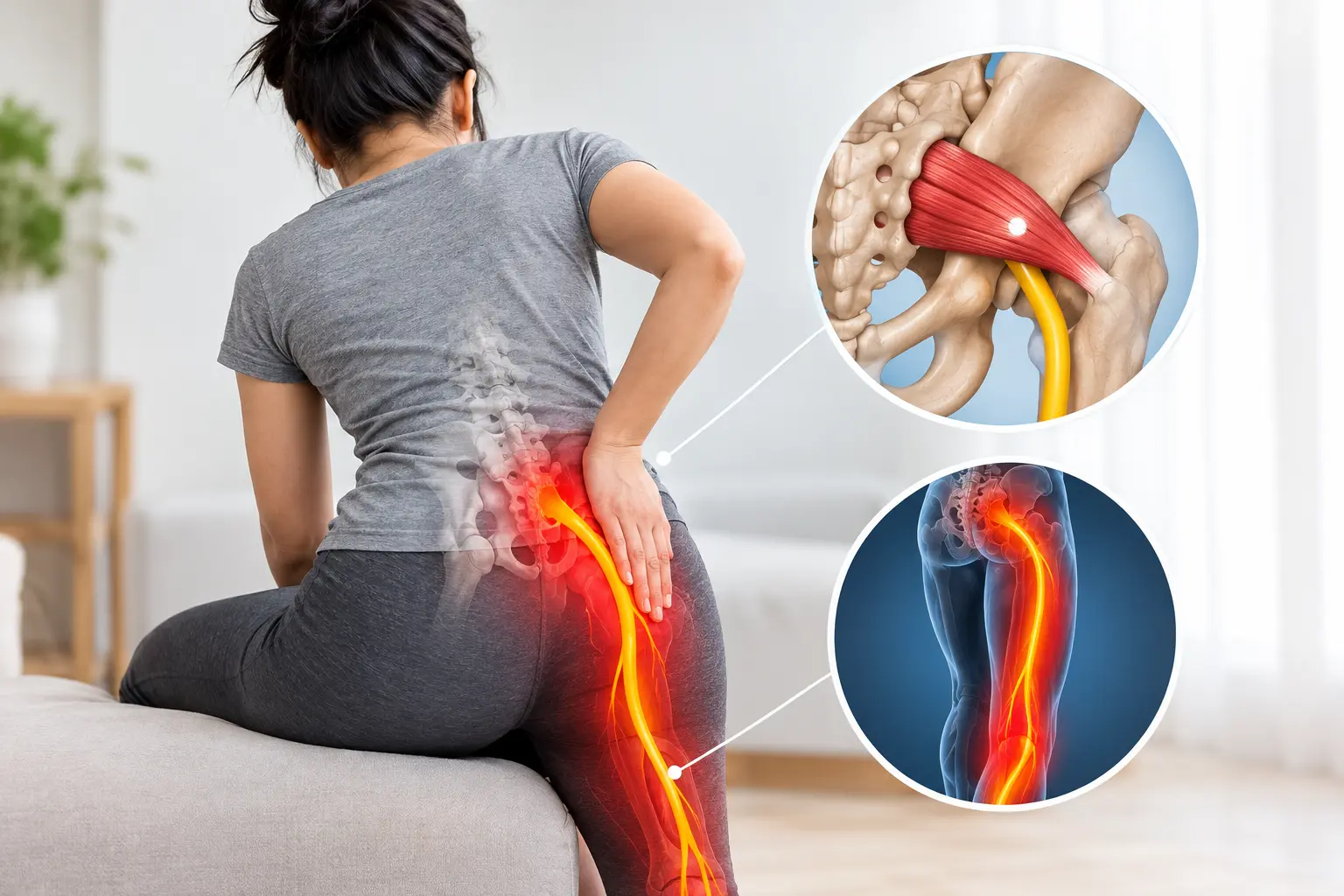
Pain that starts in the buttock and travels down the leg can make sitting, walking, working and exercising uncomfortable. Many people wonder whether they have piriformis syndrome or sciatica because both conditions can cause similar symptoms, including shooting pain, tingling and discomfort while sitting.
Understanding the difference between piriformis syndrome vs sciatica can help you recognise possible causes and seek the right assessment. Piriformis syndrome may occur when the piriformis muscle in the buttock irritates the nearby sciatic nerve. Sciatica, however, describes symptoms associated with irritation or compression of the sciatic nerve, often related to a problem in the lower spine.
At Fitsiomax Physio & Fitness Studio, Chennai, physiotherapy assessment can help identify movement difficulties and guide an appropriate recovery plan. This guide explains the symptoms, possible causes, treatment options and practical steps you can take to manage discomfort safely.
What Is Piriformis Syndrome?
Piriformis syndrome is a condition in which the piriformis muscle, located deep in the buttock, is suspected of irritating the nearby sciatic nerve. The muscle helps rotate the hip and supports movements such as walking and changing direction.
When the buttock area becomes painful or sensitive, sitting for long periods, climbing stairs or performing certain hip movements may become uncomfortable. However, similar symptoms can result from other hip, nerve or lower-back conditions. A healthcare professional should assess the cause before treatment begins.
What Is Sciatica?
Sciatica refers to pain associated with irritation or compression of the sciatic nerve or its nerve roots. The discomfort commonly travels from the lower back or buttock down one leg. A herniated disc or narrowing around the spinal nerves can contribute to symptoms.
People may experience sharp, burning or electric-like pain, tingling, numbness or weakness. Symptoms vary depending on the underlying cause. Sciatica is not a diagnosis that automatically identifies one specific injury.
Piriformis Syndrome vs Sciatica: Key Differences
Feature | Piriformis syndrome | Sciatica |
Possible source | Piriformis muscle and surrounding tissues | Irritation of the sciatic nerve or its roots |
Common pain area | Deep buttock, sometimes extending down the leg | Lower back or buttock, often extending down the leg |
Sitting | May aggravate buttock pain | May aggravate symptoms in some people |
Possible causes | Local muscle or tissue irritation; diagnosis requires care | Disc problems, spinal narrowing and other causes of nerve irritation |
Treatment | Depends on the confirmed cause and symptoms | Depends on the underlying cause and severity |
Important: These conditions can overlap in their symptoms. No single symptom or home test can reliably distinguish them.
What Causes Piriformis Syndrome and Sciatica?
Possible contributing factors include:
- Prolonged sitting: Long desk-working hours or extended travel may aggravate buttock or back discomfort.
- Repetitive exercise: Running, cycling or repeated hip movements can sometimes provoke symptoms.
- Lower-back conditions: A herniated disc or spinal narrowing may irritate nerve roots.
- Sudden changes in activity: Increasing training intensity without adequate preparation may contribute to discomfort.
- Movement and strength difficulties: Certain mobility or muscle-control issues may affect how the hip and lower back tolerate activity.
These factors do not confirm a diagnosis. A proper assessment helps determine which factors are relevant to an individual.
What Are the Common Symptoms?
Piriformis syndrome and sciatica may cause overlapping symptoms, including:
- Deep buttock pain.
- Pain radiating from the buttock into the thigh or lower leg.
- Tingling or numbness in the leg or foot.
- Discomfort after sitting for long periods.
- Pain during walking, bending or changing position.
Pain extending below the knee, altered sensation or weakness may indicate nerve involvement and should be assessed. Symptoms alone cannot establish whether the piriformis muscle or the lower spine is responsible.
Who Is at Risk?
Office workers who sit for extended periods, drivers, runners, cyclists and people returning to sport may experience symptoms affecting the buttock, hip or lower back. Older adults may also experience nerve-related pain associated with age-related spinal changes.
People recovering from surgery or an injury may develop movement limitations that require individualised rehabilitation. However, these groups are not automatically more likely to have piriformis syndrome; the underlying cause needs to be evaluated.
How Can Physiotherapy Help?
Physiotherapy can help manage symptoms, improve movement and support a gradual return to daily activities when appropriate for the underlying condition.
A physiotherapist may assess your posture, walking pattern, hip and spinal movement, strength, sensation and relevant medical history. The treatment plan will depend on the findings rather than simply the location of the pain.
Physiotherapy treatment methods
- Mobility exercises: Gentle, individually selected movements may help improve comfortable hip and lower-back movement.
- Stretching: Appropriate stretches may reduce movement-related discomfort in some cases. Aggressive stretching can aggravate symptoms.
- Strengthening exercises: Progressive exercises may improve hip, trunk and leg strength where indicated.
- Nerve mobility exercises: Specific nerve-gliding movements may be recommended for selected patients following assessment.
- Manual therapy: Certain hands-on techniques may provide short-term symptom relief when clinically appropriate.
- Activity and posture guidance: Adjusting sitting habits, work breaks and exercise loads may help reduce aggravating activities.
Physiotherapy does not guarantee that surgery can be avoided. Persistent or severe symptoms may require medical assessment, investigations or additional treatment.
Safe Home Care and Prevention Tips
If symptoms are mild and there are no warning signs, consider these general measures while arranging appropriate advice:
- Break up long sitting periods. Stand, change position or walk briefly at regular intervals.
- Stay gently active. Choose comfortable movement rather than prolonged bed rest, provided activity does not worsen symptoms.
- Avoid painful stretches. Stop any movement that increases shooting pain, tingling or numbness.
- Return to exercise gradually. Increase training intensity according to symptoms and recovery.
- Use a comfortable working position. Adjust your chair and screen to support a relaxed, sustainable posture.
- Follow an individualised exercise plan. Exercises should match the cause of symptoms and your physical abilities.
These steps may help with comfort, but they do not replace a clinical assessment.
When Should You Consult a Physiotherapist?
Arrange an assessment if buttock or leg pain persists, repeatedly returns, affects sleep or limits walking, work or exercise.
Seek urgent medical care if you develop new or progressive leg weakness, numbness around the groin or saddle area, difficulty starting or controlling urination, or loss of bowel control. These can indicate a serious spinal nerve problem that requires immediate assessment.
A physiotherapist can help assess movement and determine whether physiotherapy is appropriate or whether medical referral is needed.
Why Choose Fitsiomax in Chennai?
Fitsiomax Physio & Fitness Studio serves patients across Chennai through its Anna Nagar, T. Nagar, Parrys and ECR branches. If buttock pain, lower-back discomfort or radiating leg pain is affecting your routine, a physiotherapy assessment may help identify suitable next steps.
Treatment should be based on your symptoms, clinical findings, daily activities and recovery goals. Rather than relying on generic exercises, seek guidance that accounts for your individual needs.
Find a Fitsiomax branch in Chennai
- Anna Nagar: Visit a physiotherapy clinic in Anna Nagar for assessment and rehabilitation guidance.
- T. Nagar: Explore physiotherapy care in T. Nagar for movement-related pain and recovery needs.
- Parrys: Seek physiotherapy assessment in Parrys for suitable pain-management and rehabilitation options.
- ECR: Explore physiotherapy services in ECR for individualised movement and recovery guidance.
Searching for physiotherapy near me in Chennai? Choose a suitable branch and contact Fitsiomax to discuss your symptoms and appointment options.
Conclusion
Piriformis syndrome and sciatica can cause similar buttock and leg symptoms, but their underlying causes may differ. Identifying the source of the pain is important before choosing stretches, strengthening exercises or other treatment methods.
If pain is affecting your work, sleep, walking or exercise, consult a qualified healthcare professional for an appropriate assessment. Fitsiomax Physio & Fitness Studio in Chennai can help you explore suitable physiotherapy and rehabilitation options based on your individual needs.
Ready to take the next step? Contact your nearest Fitsiomax branch to enquire about an assessment and a personalised recovery plan.
Visit fitsiomax.clinic | Call us | Walk into our clinic in Chennai
Frequently Asked Questions
1. What is the difference between piriformis syndrome and sciatica?
Piriformis syndrome involves suspected irritation near the piriformis muscle in the buttock. Sciatica describes symptoms related to irritation of the sciatic nerve or its roots, often associated with a lower-back problem.
2. Can physiotherapy help piriformis syndrome?
Physiotherapy may help improve movement, manage symptoms and restore function. Treatment should be selected after assessment because other conditions can cause similar pain.
3. Can piriformis syndrome cause pain down the leg?
Yes. Irritation around the piriformis muscle may cause buttock pain that travels into the thigh or leg. Other nerve and spinal conditions can cause similar symptoms.
4. Which exercises are suitable for sciatica?
Suitable exercises depend on the cause and severity of symptoms. A physiotherapist may recommend specific mobility, strengthening or nerve-gliding exercises. Stop exercises that worsen radiating pain, tingling or numbness.
5. When should I visit a physiotherapist in Chennai for sciatica-like pain?
Consider an assessment if pain persists, returns frequently or interferes with daily activities. New or progressive weakness, saddle-area numbness, or bladder or bowel changes require urgent medical care rather than a routine physiotherapy appointment.