
Gait Abnormalities: Causes of Walking Problems and How Physiotherapy Can Help
Introduction
Walking is an essential part of everyday life, from commuting to work and climbing stairs to exercising and enjoying time with family. However, if you notice limping, dragging one foot, taking uneven steps, or feeling unsteady while walking, you may have a gait abnormality.
Gait abnormalities refer to changes in the normal pattern of walking. They can develop because of muscle weakness, joint stiffness, injuries, balance difficulties, or neurological conditions. Sometimes, these changes appear gradually, while others develop after an injury, surgery, or illness.
Understanding the cause is important because an altered walking pattern may increase the risk of falls and make daily activities more difficult.
Physiotherapy can help suitable patients improve strength, coordination, balance, and walking mechanics through an individualised rehabilitation programme.
At Fitsiomax Physiotherapy & Fitness Centre, Chennai, patients can seek professional guidance for mobility difficulties and rehabilitation needs.
What Are the Common Types of Gait Abnormalities?
A normal walking pattern involves coordinated movement of the hips, knees, ankles, feet, and nervous system. When one or more of these components do not work as expected, walking may become less stable or efficient.
Common types include:
- Antalgic gait: A person spends less time standing on the painful leg to reduce discomfort.
- Steppage gait: The person lifts the knee higher than usual to prevent the toes from dragging, sometimes due to foot drop.
- Waddling gait: The body moves from side to side, which may be associated with weakness around the hips.
- Parkinsonian gait: Walking may involve short, shuffling steps, reduced arm swing, and difficulty starting or turning.
- Cerebellar ataxic gait: Walking may appear wide-based and unsteady because of problems with coordination.
These walking pattern abnormalities can have different causes. A gait assessment helps a qualified healthcare professional identify the features that require further evaluation.
What Causes Gait Abnormalities?
Walking difficulties can develop for several reasons. Identifying the underlying cause is essential before choosing treatment.
1. Muscle Weakness and Joint Stiffness
Weakness in the hip, knee, or ankle muscles can make it difficult to lift the foot, maintain balance, or take even steps. Joint stiffness may also restrict movement and change the way weight is transferred during walking.
2. Pain and Sports Injuries
An ankle sprain, knee injury, hip pain, or foot condition may cause a person to limp or avoid placing weight on the affected leg. Sports injury rehabilitation may address strength and mobility as part of a plan to return to activity. Continuing to walk with significant pain may make normal movement more difficult.
3. Neurological Conditions
Conditions such as stroke, Parkinson’s disease, and certain nerve disorders can affect muscle control, sensation, coordination, and balance. Some people may develop foot drop or difficulty initiating movement. Neurological gait disorders may need coordinated medical and rehabilitation care.
4. Age-Related Changes
Older adults may experience reduced strength, slower reactions, impaired balance, or changes in vision and sensation. These factors can affect walking confidence and increase fall risk.
5. Recovery After Surgery
After hip or knee surgery, temporary weakness, stiffness, and changes in weight-bearing may influence walking. Post-surgery rehabilitation should follow the surgeon’s instructions and the patient’s individual recovery plan.
What Are the Warning Signs of Walking Problems?
Watch for changes such as:
- Limping or uneven steps.
- Dragging the toes or one foot.
- Difficulty standing up or walking for long periods.
- Feeling unsteady while turning or changing direction.
- Frequent stumbling or near-falls.
- Reduced walking speed or shorter steps.
- Difficulty climbing stairs or walking on uneven ground.
- Needing support from walls, furniture, or another person.
These signs do not identify a specific diagnosis by themselves. If they persist, worsen, or interfere with daily activities, arrange a professional assessment.
Important: Sudden difficulty walking, especially with facial drooping, arm weakness, speech problems, or sudden loss of coordination, can indicate a stroke. Seek emergency medical care immediately. Do not delay for a physiotherapy appointment.
Who Is at Risk of Gait Abnormalities?
Walking difficulties can affect people of different ages and activity levels.
- Office workers: Long periods of sitting may contribute to stiffness or reduced activity, although sitting alone does not necessarily cause a gait disorder.
- Athletes: Sports injuries can affect strength, joint movement, and the ability to put weight through a leg.
- Senior citizens: Changes in balance, strength, sensation, or vision may affect walking stability.
- Post-surgery patients: Recovery can involve temporary changes in walking mechanics.
- People with neurological conditions: Nerve and brain conditions may affect coordination, muscle control, or sensation.
Anyone experiencing persistent walking difficulties can benefit from an assessment tailored to their symptoms and medical history.
Children can also develop walking difficulties. Paediatric gait abnormalities require age-appropriate assessment; a new limp, pain, or refusal to bear weight should be discussed promptly with a healthcare professional. Adult exercise programmes should not be copied for children.
How Can Physiotherapy Help Gait Abnormalities?
Physiotherapy aims to improve safe movement and functional independence by addressing the factors contributing to an altered walking pattern. The treatment plan depends on the underlying cause, physical ability, medical history, and recovery goals.
1. Gait Analysis and Assessment
Gait analysis in physical therapy may involve observing walking speed, step length, posture, foot placement, balance, and movement symmetry. A physiotherapist may also assess muscle strength, joint range of motion, coordination, and pain.
Video motion analysis or other assessment tools may be useful when clinically appropriate and available. Their use is not necessary for every patient. Further medical evaluation may be needed if the findings suggest a neurological or other underlying condition.
2. Strengthening Exercises
Targeted exercises may help improve the muscles needed for walking, including the hip, thigh, calf, and ankle muscles. Examples may include:
- Supported sit-to-stand exercises.
- Heel raises.
- Seated knee extensions.
- Supported hip strengthening exercises.
The appropriate exercises and resistance depend on the person’s condition and abilities.
3. Balance and Coordination Training
Balance exercises may help suitable patients improve postural control and confidence during movement. A physiotherapist might introduce supported weight-shifting exercises, controlled stepping, or changes in walking direction. Proprioception training may address awareness of joint position when relevant.
These activities should be performed with appropriate support, especially for people who have a history of falls. For diagnosed vestibular conditions, a suitably trained clinician may recommend vestibular rehabilitation after assessment; it is not required for every balance or gait disorder.
4. Gait Training and Walking Practice
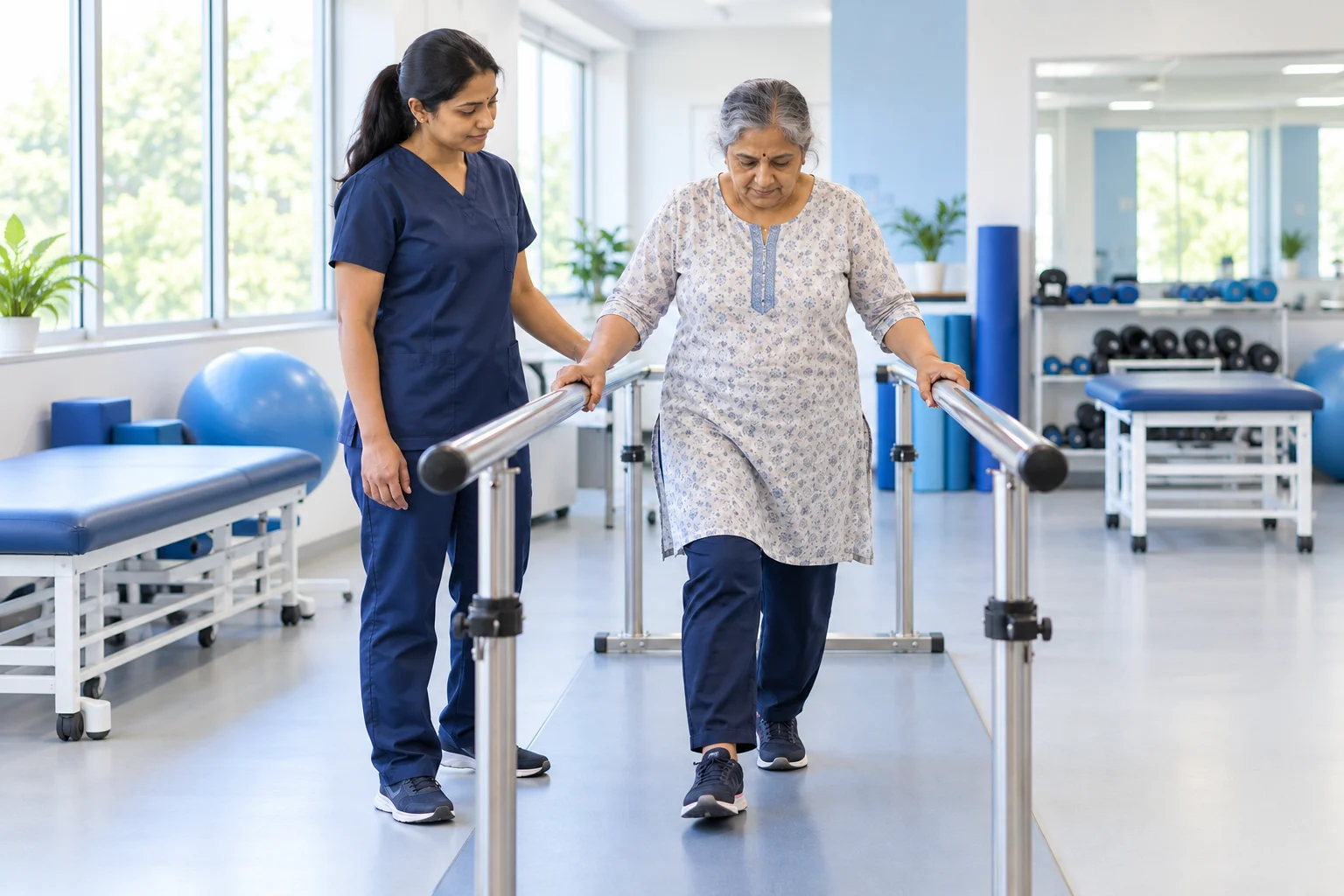
Gait training in physical therapy involves practising walking skills with guidance. Depending on the person’s needs, treatment may focus on step length, foot clearance, turning, walking speed, or safe use of assistive devices for walking.
People recovering from a stroke or neurological condition may require a specialised rehabilitation programme. Stroke gait rehabilitation and gait retraining exercises should match the individual’s medical status, abilities, and goals.
5. Mobility Exercises and Stretching
Restricted movement in the hips, knees, ankles, or feet may affect walking. Suitable mobility exercises and flexibility training can help address stiffness and improve available movement.
Manual therapy may also be considered in selected cases when appropriate. It should complement, rather than replace, an individualised rehabilitation plan.
6. Foot Drop Rehabilitation
Foot drop can make it difficult to lift the front of the foot while walking. Treatment depends on its cause and may involve strengthening where appropriate, gait training, and assessment for an ankle-foot orthosis or another suitable support.
New or unexplained foot drop requires prompt medical assessment. Treatment for gait abnormalities should address the cause rather than simply trying to make every person walk in the same way.
What Can You Do at Home to Support Better Walking?
Home care can support gait rehabilitation, but it should not replace an assessment when walking has changed unexpectedly or significantly. Consider these precautions:
- Keep walkways clear: Remove loose rugs, trailing cables, and clutter that could cause trips.
- Wear suitable footwear: Choose stable, well-fitting shoes with appropriate grip.
- Stay active within your limits: Follow a clinician-approved activity plan rather than pushing through pain or instability.
- Use prescribed walking aids: A cane or walker may improve safety when correctly selected and fitted.
- Avoid unsupported balance exercises: Practise only activities appropriate for your ability and with suitable support.
- Follow your rehabilitation plan: Progress exercises gradually according to professional advice.
Stop an exercise if it causes new or worsening symptoms, significant pain, dizziness, or unusual weakness, and seek appropriate medical guidance.
For more on walking stability and fall prevention, read our guide to balance problems and frequent falls in older adults.
When Should You Consult a Physiotherapist?
Consider consulting a physiotherapist if you experience persistent limping, reduced walking confidence, difficulty with stairs, recurring balance problems, or walking difficulties after an injury or surgery.
A physiotherapist can assess movement and recommend exercises or rehabilitation strategies suited to your needs. Your doctor may also need to investigate the underlying cause.
Seek urgent medical attention for sudden walking difficulties, new severe weakness, or other sudden neurological symptoms. New foot drop or rapidly worsening walking ability also requires prompt medical evaluation.
Why Choose Fitsiomax in Chennai?
Fitsiomax Physiotherapy & Fitness Centre serves patients across Chennai through its Anna Nagar, T. Nagar, Parrys, and ECR branches.
Patients seeking help with walking difficulties can discuss their symptoms and rehabilitation goals with the clinical team. Depending on the assessment, a care plan may include mobility exercises, strengthening, balance training, gait practice, and guidance for daily activities.
The focus should be on understanding each patient’s needs, setting realistic recovery goals, and progressing safely rather than promising the same result for everyone.
If walking difficulties are affecting your work, exercise, or everyday independence, contact Fitsiomax to enquire about an appropriate assessment. Ask the team whether the services and expertise available are suitable for your condition.
Physiotherapy Clinic Locations in Chennai
If you are searching online for a physiotherapy clinic in Chennai, you can enquire at these Fitsiomax branches:
- Physiotherapy clinic in Anna Nagar
- Physiotherapy clinic in T. Nagar
- Physiotherapy clinic in Parrys
- Physiotherapy clinic in ECR
People looking for physiotherapy near me in Chennai can contact their nearest branch to enquire about available physiotherapy services and appointment options.
Choose the location that is convenient for you and explain your walking difficulties when booking. The clinical team can advise whether an assessment at the clinic is suitable or whether further medical evaluation is needed first.
Conclusion: Take the First Step Towards Safer Walking
Gait abnormalities can develop because of pain, muscle weakness, joint stiffness, balance difficulties, or neurological conditions. Identifying the underlying cause is the first step towards choosing appropriate care.
Physiotherapy may help improve strength, coordination, mobility, and walking function through individualised assessment and rehabilitation. However, treatment and recovery vary depending on the cause and the person’s overall health.
If changes in your walking pattern are affecting your daily life, contact Fitsiomax Physiotherapy & Fitness Centre in Chennai to enquire about an assessment and suitable rehabilitation options.
Further Reading
General patient education, not an individual diagnosis or exercise prescription. Images are AI-generated educational illustrations and do not depict actual Fitsiomax staff or patients.
Frequently Asked Questions
1. What are gait abnormalities?
Gait abnormalities are changes in the normal walking pattern, such as limping, shuffling, uneven steps, or dragging a foot. They may be associated with pain, weakness, joint problems, balance difficulties, or neurological conditions.
2. Can physiotherapy help gait abnormalities?
Depending on the underlying cause, physiotherapy may help improve walking mechanics, strength, balance, coordination, and mobility through individualised rehabilitation.
3. What causes an abnormal walking pattern?
Possible causes include muscle weakness, joint stiffness, injuries, foot drop, neurological conditions, balance disorders, and changes following surgery. A professional assessment can help identify the likely cause.
4. Which exercises are used for gait rehabilitation?
Depending on the patient’s needs, rehabilitation may include supported sit-to-stand practice, strengthening exercises, balance training, stepping practice, and supervised walking exercises. The programme should be tailored to the individual.
5. When should I seek professional help for walking difficulties?
Seek assessment if walking difficulties persist, worsen, or affect everyday activities. Sudden difficulty walking, particularly with facial drooping, arm weakness, or speech problems, requires emergency medical attention.