
Lower Back Pain When Sitting: Causes and When to Seek Help
Introduction
Many people feel discomfort after sitting for long hours but assume it is simple tiredness. At Fitsiomax, this is a frequently discussed concern among desk workers, students, and drivers. Pain rarely appears without reason. In most cases, it is the body’s early warning that the spine is under continuous stress.
Sitting itself is not harmful. The problem begins when the body remains in the same posture for too long. The lower spine carries body weight while the supporting muscles remain inactive. Over time, the muscles weaken, joints stiffen, and discomfort starts during sitting.
What is lower back pain when sitting?
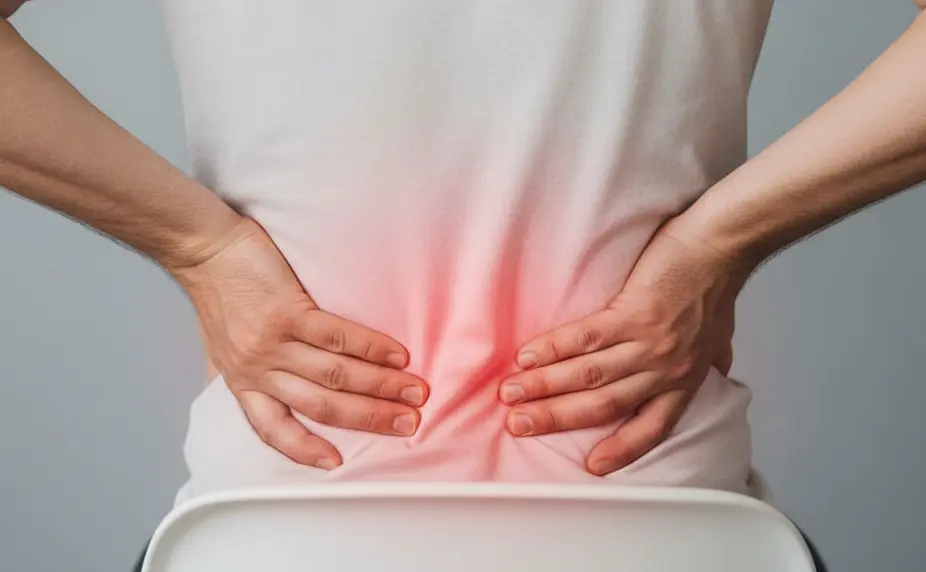
Lower back pain when sitting is discomfort in the lumbar region caused by prolonged pressure on spinal discs and reduced muscular support. The pain often reduces after standing or walking but returns again while sitting. It commonly affects people who work at computers or remain seated for extended periods.
Quick Understanding
- Sitting increases pressure on spinal discs
- Weak muscles fail to support the spine
- Poor posture strains joints and ligaments
- Reduced movement lowers blood circulation
Repeated strain leads to recurring discomfort
Who usually gets lower back pain when sitting?
This condition commonly affects:
- Office employees
- Students studying long hours
- Drivers
- Work-from-home professionals
- Laptop and computer users
How does the pain usually begin?
In most situations the discomfort develops gradually:
- Mild soreness after long sitting
- Morning stiffness
- Pain while getting up from chair
- Difficulty sitting for long
Pain spreading toward hip
lower back pain
Lower back pain refers to discomfort between the rib cage and pelvis. It can affect people of any age. Early understanding helps prevent worsening. Persistent symptoms affecting daily tasks should be evaluated.
low back pain
Low back pain is another term commonly used in health discussions. It is especially seen in people who sit more than they move.Recognizing the condition early allows posture correction and safe movement habits.
severe lower back pain
Severe lower back pain limits normal activities such as walking, standing, or bending.If pain is intense or follows injury, medical evaluation is important before starting any exercises.
chronic lower back pain
Chronic lower back pain lasts more than three months. It often develops due to repeated strain or long-term posture issues. Improving lifestyle habits plays a major role in recovery.
lumbar pain
Lumbar pain specifically involves the lower spinal joints and surrounding tissues. This area supports body weight during sitting.
Avoid lifting heavy objects while symptoms are active.
lower back ache
A lower back ache feels dull and continuous. It commonly appears after a long workday. Short movement breaks during work can help prevent progression.
pain in lower back
Pain in lower back may appear when rising from a chair or bending forward. Early care prevents stiffness and restricted mobility.
why does my lower back hurt
Many people ask this question when pain appears without injury. Often, the cause is muscle fatigue or posture strain. Understanding daily habits helps prevent recurrence.
what causes lower back pain
Common causes include prolonged sitting, improper lifting, weak core muscles, and poor workstation setup. Adjusting routine activities can reduce strain on the spine.
causes of lower back pain
Causes may involve muscles, joints, or nerve irritation. Sleep quality and stress may also influence symptoms. Multiple factors usually exist together.
lower back pain causes
Everyday habits like slouching, unsupported chairs, and inactivity frequently contribute. Gradual posture correction is safer than sudden changes.
lower back muscle pain
Lower back muscle pain occurs when muscles remain tense or weak. In routine observations at Fitsiomax, guided strengthening and posture education often help restore balance.
lower back pain symptoms
Symptoms may include stiffness, bending difficulty, and discomfort while sitting. Numbness or tingling requires prompt evaluation.
sharp pain in lower back
Sharp pain in lower back can occur during sudden movements or lifting. Stop activity immediately if sharp pain appears.
lower back stiffness
Lower back stiffness commonly occurs after long sitting or in the morning. Gentle mobility exercises improve flexibility.
discomfort in lower spine
Discomfort in lower spine feels like pressure rather than strong pain and may signal early strain. Persistent pressure should be assessed.
lower back pain relief
Relief focuses on restoring movement and improving muscle balance. Education and posture awareness support recovery.
how to relieve lower back pain
Helpful steps include:
- taking regular movement breaks
- adjusting sitting posture
- strengthening supporting muscles
- staying physically active
Exercises should match the individual’s comfort level.
how to treat lower back pain
Treatment usually combines education, guided movement, and functional training. Related rehabilitation or supervised fitness routines may support recovery. Consistency matters more than intensity.
Is lower back pain when sitting serious?
Not always. Many cases are due to posture strain and muscle weakness. However, assessment is important if the pain lasts more than two weeks, spreads to the leg, or causes numbness.
How can you prevent lower back pain while sitting?
You can reduce strain by:
- standing every 30–40 minutes
- keeping screen at eye level
- supporting the lower back
- keeping feet flat on the floor
- avoiding slouched posture
Conclusion
Lower back pain when sitting is an early warning signal rather than a minor inconvenience. The spine requires movement, strength, and proper support to function normally. Understanding the causes allows individuals to adjust habits and avoid long-term complications. Movement-focused care and awareness, including the approaches discussed at Fitsiomax aim to restore comfortable daily activity and reduce recurrence.
Frequently Asked Questions
1. Can sitting all day weaken the back?
Yes. In most cases, prolonged sitting reduces muscle activity and increases pressure on spinal joints, leading to discomfort over time.
2. Should I exercise during back discomfort?
Based on general practice, gentle guided movement is usually recommended instead of complete rest. Avoid high-impact workouts initially.
3. Is walking helpful for lower back pain?
Often yes. Walking keeps joints mobile and improves circulation, which professionals usually consider beneficial.
4. Do posture supports really work?
In many cases, lumbar support helps maintain alignment during sitting and may reduce strain.
5. When should I see a professional?
If pain lasts longer than one to two weeks or interferes with daily activities, professionals usually recommend evaluation.
6. Can stress affect the lower back?
Yes. Stress increases muscle tension and may contribute to discomfort even without injury.